Close Menu
Illustrated Curiosity
    Facebook X (Twitter) Instagram YouTube
    Illustrated Curiosity
    • Earth
    • Economics
    • Environment
      • Climate
      • Environmental Tech
      • Pollution
      • Wildlife
    • Health
      • Health Tech
      • Medicine
      • Nutrition
      • Exercise
    • History
      • Prehistory
      • Ancient History
      • Postclassical Era
      • Modern History
    • Humans
      • Human Brain
      • Psychology
    • Life
      • Animals & Plants
      • Genetics
      • Paleontology
      • Evolution
      • Genetic Engineering
    • Physics
    • Space
      • Astrobiology
      • Astronomy
      • Extrasolar Planets
      • Space Tech
      • Spaceflight
    • Technology
      • Artificial Intelligence
      • Energy
      • Engineering
      • Materials
      • Robotics
      • Vehicles
    Illustrated Curiosity
    Home » Crypt Keeper Wasp Is a Parasite of a Parasite
    Animals & Plants

    Crypt Keeper Wasp Is a Parasite of a Parasite

    January 30, 2017No Comments2 Mins Read
    Share
    Facebook Twitter LinkedIn Pinterest Email

    A newfound insect has been named after the Egyptian god of evil and its probably a name well deserved.
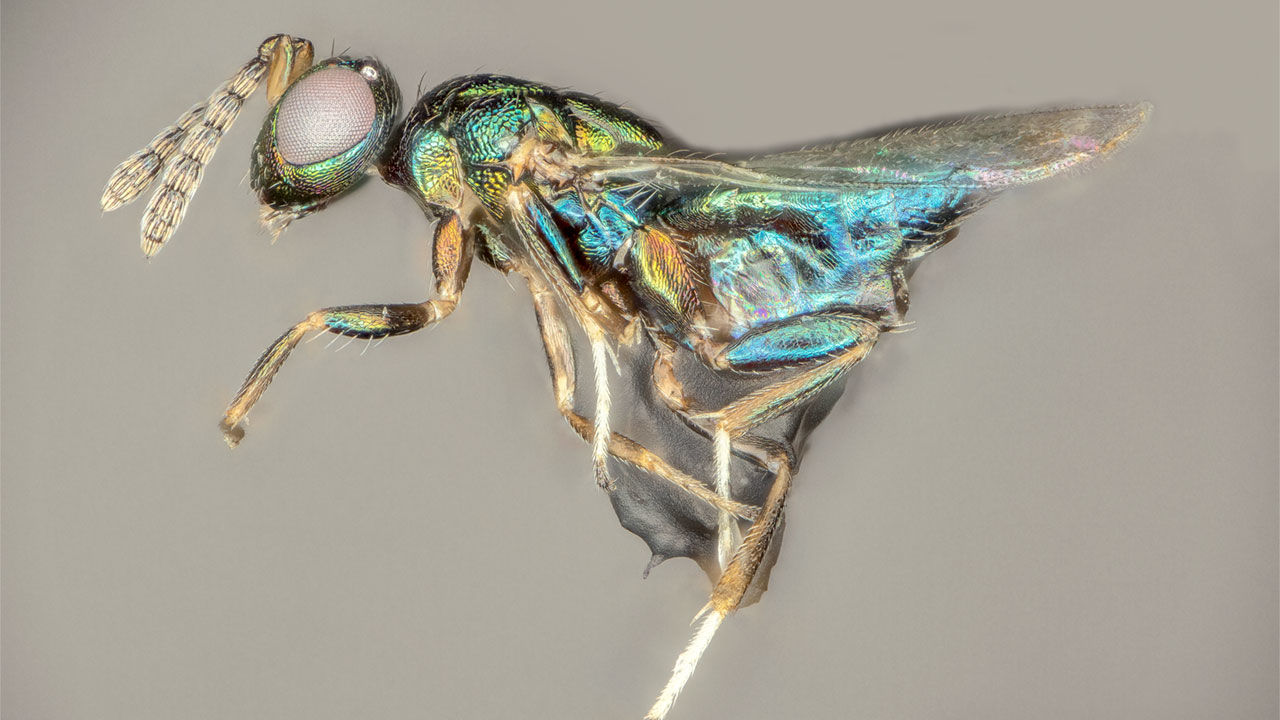
    Euderus set wasp is named after the evil Egyptian god Set. Its common name is the crypt keeper wasp. Image credit: Ryan Ridenbaugh and Miles Zhang

    The crypt gall wasp (Bassettia pallida) is a parasite that creates small cavities in oak trees where it lays its eggs. This method of depositing their eggs causes the formation of ‘galls’ – a kind of swelling growth – on which the larvae feed, hence their name.

    The gall wasp larvae then hatch and grow up protected eating itself out of the three. End of story, right? Researchers have now discovered another insect parasitizing on the parasite. This insect called crypt keeper wasp (Euderus set wasp) lays its eggs inside the gallfly larvae.

    Just as the gall wasp manipulates plants to become their home, this newly discovered species seems to manipulate the gall wasp to do its bidding. It appears as if the crypt keeper wasp larvae reprogram the gall wasp larvae to emerge from its tree cavity prematurely, it also manipulates them into making the exit hole too narrow so that it gets stuck.

    The parasite can then start eating the stuck gall wasp larvae from the inside and when the parasite is fully grown, it exits its host through the head.

    Scientists believe that the parasite is too weak to be able to go through the bark of the tree, it, therefore, utilizes a different parasite to go through it.

    Reference:

    K. Weiner L. Smith et al. “Tales from the Crypt: a parasitoid manipulates the behavior of its parasite host” DOI: 10.1098 / rspb.2016.2365

    Parasites
    Share. Facebook Twitter Pinterest LinkedIn Tumblr Email Copy Link

    Related Posts

    Kindness To Dogs During Training Matters

    December 28, 2020

    Solar Storms May Throw off Whale Navigation and Cause Strandings

    May 5, 2020

    Why Bats Are Breeding Grounds for Deadly Viruses Like Ebola and SARS

    March 5, 2020

    Cats can express emotions with subtle facial expressions

    February 12, 2020

    Not Just Dogs, Study Reveals Cats Too Can Form Intense Bonds with Humans

    September 25, 2019

    Some Deep-Sea Fish Can See Color in Near Total Darkness

    May 13, 2019
    Recent Posts
    • How the End of Bretton Woods Reshaped Our Economies — and Our Politics
    • Can the U.S. Really Handle 250% Debt-to-GDP? Why Jackson Hole’s Daring Paper Is Wrong
    • Japan’s Fiscal Trap: What Happens If Austerity Is No Longer an Option?
    • The Rise of Range Extended Electric Vehicles (REEVs): A New Era of Hybrid Mobility
    • The Great Capital Rotation: A Shift from U.S. Treasuries to Gold and Real Assets
    • The Hidden Risks of Short-Term Debt: A Balancing Act in U.S. Fiscal Policy
    • The Looming U.S. Debt Spiral: Understanding the Risks
    • The Looming Recession: Seven Economic Indicators Flashing Red for 2025
    • Europa Clipper: NASA’s Mission to Unlock the Secrets of Jupiter’s Icy Moon
    • Could Hedge Funds Cause Chaos in the U.S. Treasury Market? And What About Inflation?
    © 2025 Illustrated Curiosity

    Type above and press Enter to search. Press Esc to cancel.

    This website uses cookies to improve your experience. We'll assume you're ok with this, but you can opt-out if you wish.Accept Reject Read More
    Privacy & Cookies Policy

    Privacy Overview

    This website uses cookies to improve your experience while you navigate through the website. Out of these, the cookies that are categorized as necessary are stored on your browser as they are essential for the working of basic functionalities of the website. We also use third-party cookies that help us analyze and understand how you use this website. These cookies will be stored in your browser only with your consent. You also have the option to opt-out of these cookies. But opting out of some of these cookies may affect your browsing experience.
    Necessary
    Always Enabled
    Necessary cookies are absolutely essential for the website to function properly. This category only includes cookies that ensures basic functionalities and security features of the website. These cookies do not store any personal information.
    Non-necessary
    Any cookies that may not be particularly necessary for the website to function and is used specifically to collect user personal data via analytics, ads, other embedded contents are termed as non-necessary cookies. It is mandatory to procure user consent prior to running these cookies on your website.
    SAVE & ACCEPT