
Strange gelatinous balls have been observed along the Norwegian and Swedish coastline.
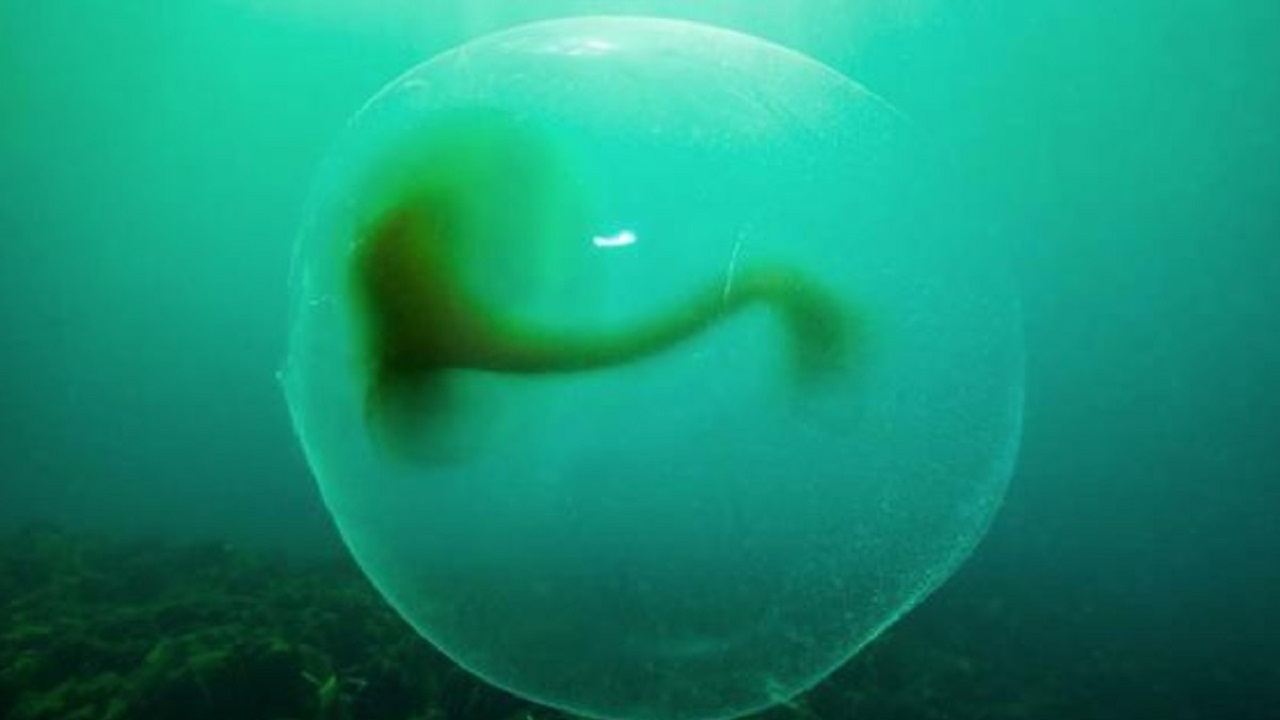
Two have been seen along the Swedish coastline, seven along the Norwegia during the summer. Noone knows what these strange jelly balls really are.
The first jelly ball appeared along the Norwegian coast in 2002. Four years later, a Norwegian diver, Erling Svensen, encountered a ball in Matrefjord nearby Rosendal. That ball was about a meter in diameter, and he compares it to a firm but fluffy-balloon-like ball when interviewed by NRK.
In total, these strange balls, floating at depths of around 20 meters, have been seen seven times only this summer around the Norwegian coast. Two observations have also been made along the Swedish west coast.
Since most of these jelly capsules have been seen off the west coast of Norway in the summer half of the year this could be a clue to the animal habitat, but the number of Norwegian observations might also be explained by the popularity of these waters among divers in the summer time.
Until examined by researchers to affirm what they are, there is a wide range of speculation what these nearly transparent about meter-in-diameter balls, really are.
Some researchers have suggested that they are eggs from giant squids, according to forskning.no. Others hold this less likely, squids are known to make smaller jelly eggs than these. But in order to arrive at a definitive conclusion, a tissue test is required.
Norwegian researchers have gone out to the public for help. That whoever sees a jelly ball is asked to contact the Institute of Marine Research. But what the researchers would like most of all is a DNA sample.