Close Menu
Illustrated Curiosity
    Facebook X (Twitter) Instagram YouTube
    Illustrated Curiosity
    • Earth
    • Economics
    • Environment
      • Climate
      • Environmental Tech
      • Pollution
      • Wildlife
    • Health
      • Health Tech
      • Medicine
      • Nutrition
      • Exercise
    • History
      • Prehistory
      • Ancient History
      • Postclassical Era
      • Modern History
    • Humans
      • Human Brain
      • Psychology
    • Life
      • Animals & Plants
      • Genetics
      • Paleontology
      • Evolution
      • Genetic Engineering
    • Physics
    • Space
      • Astrobiology
      • Astronomy
      • Extrasolar Planets
      • Space Tech
      • Spaceflight
    • Technology
      • Artificial Intelligence
      • Energy
      • Engineering
      • Materials
      • Robotics
      • Vehicles
    Illustrated Curiosity
    Home » New research suggests that hippos are omnivores
    Animals & Plants

    New research suggests that hippos are omnivores

    January 3, 20162 Mins Read
    Share
    Facebook Twitter LinkedIn Pinterest Email
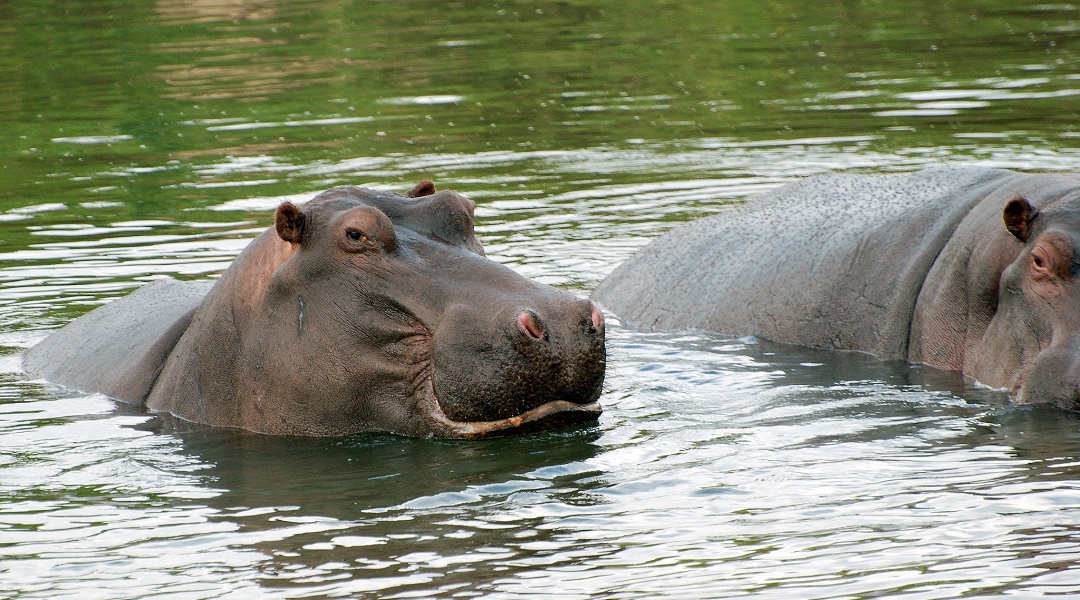
    Photo credit: Harvey Barrison / Flickr
    The hippopotamus (Hippopotamus amphibius), from the ancient Greek for “river horse”, is a large, mostly herbivorous mammal in sub-Saharan Africa, and one of only two extant species in the family Hippopotamidae (the other is the Pygmy Hippopotamus.)

    Hippos are omnivores, this is the conclusion drawn by an international group of researchers who have compiled their own and others’ observations of what hippos actually eat.

    These enormous animals spend most of their days in the water. Then, during nighttime they roam the surrounding lands of their water habitat to eat enormous amounts of grass.

    But contrary to popular belief, they are actually not pure herbivores. They also eat meat, carcasses of animals such as zebras, elephants, antelopes and even other hippos.

    These animals could have been killed by crocodiles or succumbed to the disease. But Hippos regulatory kill other animals themselves.

    It has been previously noted that hippos eat meat, but it was then thought to be exceptional and a deviant behavior among certain individuals. This new research, however, concludes that the behavior is widespread and that eating meat is part the hippos ecological niche.

    The research is perhaps not so surprising considering that their nearest relatives on Earth are indeed whales, all of which are carnivores.

    The researchers also point out the fact that the hippopotamus populations are often severely affected by the deadly and contagious disease anthrax. Some outbreaks almost exclusively hit hippos and no other animals. The researchers believe this may be because they eat the carcasses of their own species that are infected with anthrax.

    _______________
    Dudley et al: “Carnivory in the common hippopotamus Hippopotamus amphibius: implications for the ecology and epidemiology of anthrax in African landscapes“, Mammal Review, 2015. DOI:10.1111/mam.12056.
    ______________________________

    Hippopotamus Omnivore
    Share. Facebook Twitter Pinterest LinkedIn Tumblr Email Copy Link

    Related Posts

    Kindness To Dogs During Training Matters

    December 28, 2020

    Solar Storms May Throw off Whale Navigation and Cause Strandings

    May 5, 2020

    Why Bats Are Breeding Grounds for Deadly Viruses Like Ebola and SARS

    March 5, 2020

    Cats can express emotions with subtle facial expressions

    February 12, 2020

    Not Just Dogs, Study Reveals Cats Too Can Form Intense Bonds with Humans

    September 25, 2019

    Some Deep-Sea Fish Can See Color in Near Total Darkness

    May 13, 2019
    Recent Posts
    • America’s Quiet Shift Into Fiscal Dominance: Why Inflation May Be Preparing for a Second Act
    • How the End of Bretton Woods Reshaped Our Economies — and Our Politics
    • Can the U.S. Really Handle 250% Debt-to-GDP? Why Jackson Hole’s Daring Paper Is Wrong
    • Japan’s Fiscal Trap: What Happens If Austerity Is No Longer an Option?
    • The Rise of Range Extended Electric Vehicles (REEVs): A New Era of Hybrid Mobility
    • The Great Capital Rotation: A Shift from U.S. Treasuries to Gold and Real Assets
    • The Hidden Risks of Short-Term Debt: A Balancing Act in U.S. Fiscal Policy
    • The Looming U.S. Debt Spiral: Understanding the Risks
    • The Looming Recession: Seven Economic Indicators Flashing Red for 2025
    • Europa Clipper: NASA’s Mission to Unlock the Secrets of Jupiter’s Icy Moon
    © 2025 Illustrated Curiosity

    Type above and press Enter to search. Press Esc to cancel.

    This website uses cookies to improve your experience. We'll assume you're ok with this, but you can opt-out if you wish.Accept Reject Read More
    Privacy & Cookies Policy

    Privacy Overview

    This website uses cookies to improve your experience while you navigate through the website. Out of these, the cookies that are categorized as necessary are stored on your browser as they are essential for the working of basic functionalities of the website. We also use third-party cookies that help us analyze and understand how you use this website. These cookies will be stored in your browser only with your consent. You also have the option to opt-out of these cookies. But opting out of some of these cookies may affect your browsing experience.
    Necessary
    Always Enabled
    Necessary cookies are absolutely essential for the website to function properly. This category only includes cookies that ensures basic functionalities and security features of the website. These cookies do not store any personal information.
    Non-necessary
    Any cookies that may not be particularly necessary for the website to function and is used specifically to collect user personal data via analytics, ads, other embedded contents are termed as non-necessary cookies. It is mandatory to procure user consent prior to running these cookies on your website.
    SAVE & ACCEPT