Close Menu
Illustrated Curiosity | Economics, History, Science, Space, Technology, Health, Physics, Earth
    Facebook X (Twitter) Instagram YouTube
    Illustrated Curiosity | Economics, History, Science, Space, Technology, Health, Physics, Earth
    • Earth
    • Economics
    • Environment
      • Environmental Tech
      • Pollution
      • Wildlife
    • Health
      • Health Tech
      • Medicine
      • Nutrition
      • Exercise
    • History
      • Prehistory
      • Ancient History
      • Postclassical Era
      • Modern History
    • Humans
      • Human Brain
      • Psychology
    • Life
      • Animals & Plants
      • Genetics
      • Paleontology
      • Evolution
      • Genetic Engineering
    • Physics
    • Space
      • Astrobiology
      • Astronomy
      • Extrasolar Planets
      • Space Tech
      • Spaceflight
    • Technology
      • Artificial Intelligence
      • Energy
      • Engineering
      • Materials
      • Robotics
      • Vehicles
    Illustrated Curiosity | Economics, History, Science, Space, Technology, Health, Physics, Earth
    Home » NASA study fungi to keep space travelers safe on new worlds
    Spaceflight

    NASA study fungi to keep space travelers safe on new worlds

    July 11, 20172 Mins Read
    Illustration by Illustrated Curiosity
    Share
    Facebook Twitter LinkedIn Pinterest Email

    How is the environment around us and microorganisms affected by us staying within a limited space for long durations? NASA researchers have attempted to answer this question in a new study.
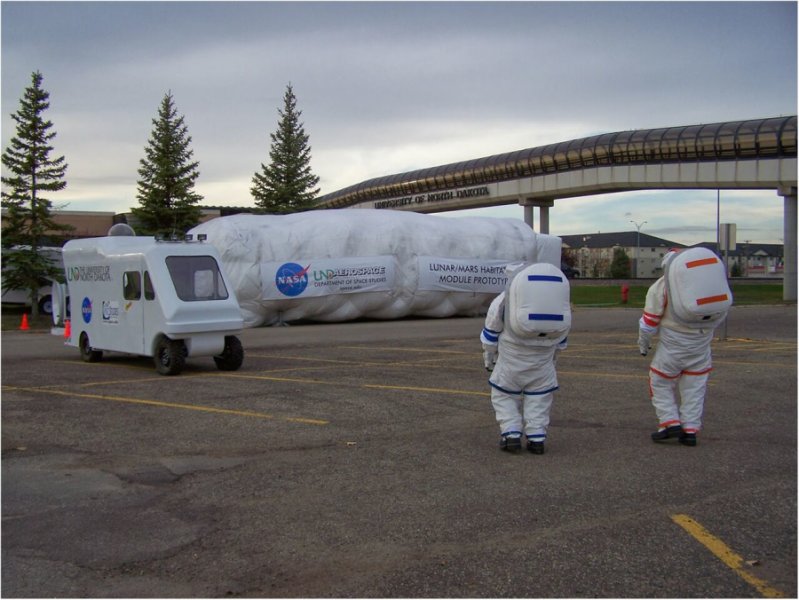
    Humans must look to outer space within the next century, or they will become extinct, according to Professor Stephen Hawking. To do this, we must overcome a number of problems, including radiation and the psychological aspects of living within a cramped space.

    There is another problem with people living within a very small space for long periods of time: Researchers at NASA have studied what happens to microorganisms such as bacteria and microscopic fungi during these durations.

    The study included a group of recruited students who were to stay within a closed environment for 30 days, intended to simulate the existence of a space station, for example.

    Fungal samples were collected from eight sampling locations at four time-points: just before habitation and at 13, 20, and 30 days of habitation. The habitat was cleaned weekly with antibacterial wipes.

    The researchers noticed that the living fungal flora changed remarkably. This happened even though no new fungi were allowed in.

    Some fungi prospered while others declined. The researchers saw, for example, increases in fungi (Cladosporium cladosporioides) that could potentially cause infections, asthma, or allergy in humans.

    The researchers emphasize the necessity to keep an eye on the environment to prevent potential overgrowth of fungi that could potentially harm individuals and propose that new methods need to be developed to maintain and clean the environment.

    The study is certainly interesting in the context of future space exploration for what it is intended, but also relevant for any environments on Earth today where many people live and work.

    Reference:

    Blachowicz et al.,”Human presence impacts fungal diversity of inflated lunar/Mars analog habitat“, publicerad 11 juli i Microbiome, doi: 10.1186/s40168-017-0280-8
    Space Colonization
    Share. Facebook Twitter Pinterest LinkedIn Tumblr Email Copy Link

    Related Posts

    Europa Clipper: NASA’s Mission to Unlock the Secrets of Jupiter’s Icy Moon

    October 20, 2024

    Spinlaunch Hurls Satellites into Orbit With a Giant Centrifuge

    December 6, 2021

    SpaceX Capsule and NASA Crew Make Historic Splashdown

    August 3, 2020

    NASA and SpaceX are Making History Launching Astronauts to Space! | NASA Live

    May 27, 2020

    Red Space Salad Given Green Light

    May 26, 2020

    NASA Will Launch a Lunar VIPER to Hunt Moon Water in 2022

    November 12, 2019
    Recent Posts
    • The Day the Alliance Died
    • Evaluating Heart Disease: How Cumulative Diet Choices Compound Your Risk
    • What Would Happen If China Attacked Taiwan?
    • Geopoliticisation as a Structural Tailwind for Commodity Prices
    • America’s Economic Remodel: Who’s Really Paying the Bill?
    • Why Inflation May Be Preparing for a Second Act
    • How the End of Bretton Woods Reshaped Our Economies — and Our Politics
    • Can the U.S. Really Handle 250% Debt-to-GDP? Why Jackson Hole’s Daring Paper Is Wrong
    • Japan’s Fiscal Trap: What Happens If Austerity Is No Longer an Option?
    • The Rise of Range Extended Electric Vehicles (REEVs): A New Era of Hybrid Mobility
    © 2025 Illustrated Curiosity

    Type above and press Enter to search. Press Esc to cancel.