Close Menu
Illustrated Curiosity | Economics, History, Science, Space, Technology, Health, Physics, Earth
    Facebook X (Twitter) Instagram YouTube
    Illustrated Curiosity | Economics, History, Science, Space, Technology, Health, Physics, Earth
    • Earth
    • Economics
    • Environment
      • Environmental Tech
      • Pollution
      • Wildlife
    • Health
      • Health Tech
      • Medicine
      • Nutrition
      • Exercise
    • History
      • Prehistory
      • Ancient History
      • Postclassical Era
      • Modern History
    • Humans
      • Human Brain
      • Psychology
    • Life
      • Animals & Plants
      • Genetics
      • Paleontology
      • Evolution
      • Genetic Engineering
    • Physics
    • Space
      • Astrobiology
      • Astronomy
      • Extrasolar Planets
      • Space Tech
      • Spaceflight
    • Technology
      • Artificial Intelligence
      • Energy
      • Engineering
      • Materials
      • Robotics
      • Vehicles
    Illustrated Curiosity | Economics, History, Science, Space, Technology, Health, Physics, Earth
    Home » Parker Solar Probe Becomes Closest-yet Spacecraft to Sun
    Spaceflight

    Parker Solar Probe Becomes Closest-yet Spacecraft to Sun

    November 5, 20182 Mins Read
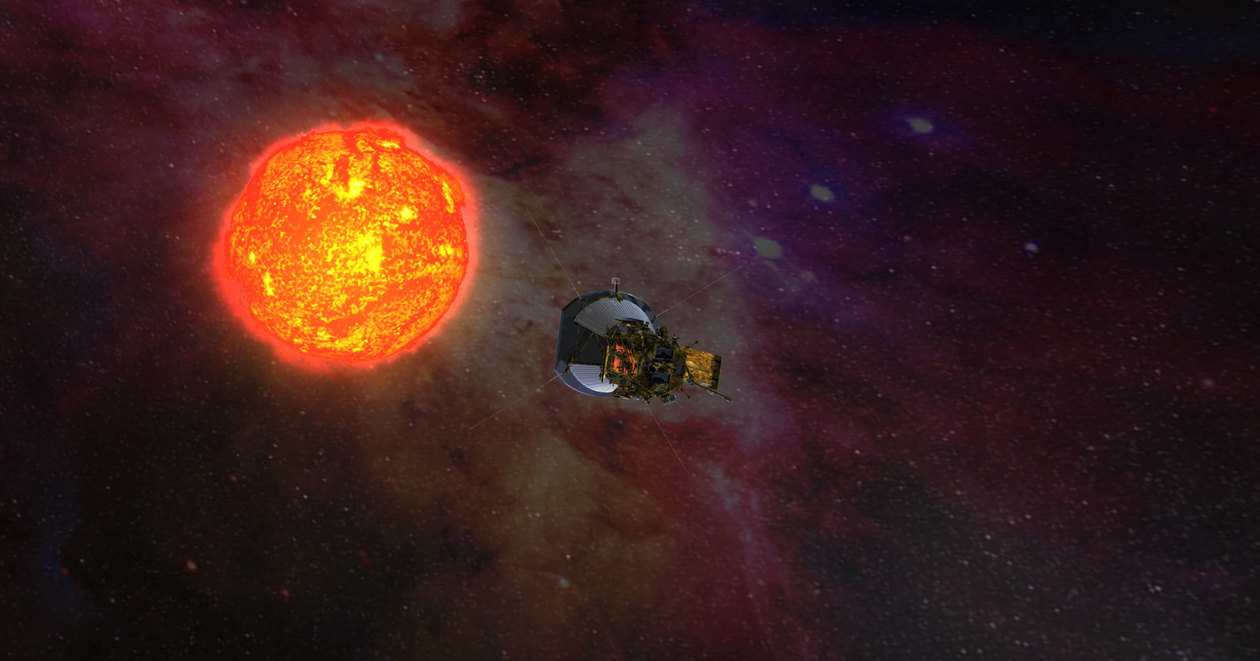
    The Parker Solar Probe now holds the record for closest approach to the sun by a human-made object. Image: NASA
    Share
    Facebook Twitter LinkedIn Pinterest Email

    NASA has announced that its solar hunter Parker Solar Probe is now the human-made object that has been closest to the sun, ever.

    The craft has passed the previous record of 42.7 million kilometers (26,5 million miles) from the sun’s surface, which the German aircraft Helios 2 set in 1978.

    “It’s been just 78 days since Parker Solar Probe launched, and we’ve now come closer to our star than any other spacecraft in history. It’s a proud moment for the team, though we remain focused on our first solar encounter, which begins on Oct. 31. “

    – NASA’s project manager, Andy Driesman.

    Parker Solar Probe’s main objective as it approaches the sun will be to determine why the sun’s atmosphere, the so-called corona, is three times warmer than the surface of the sun. The aircraft will also investigate wind thunder and how these can possibly affect the Earth.

    The probe will approach within 6.9 million kilometers (4.3 million miles) from the center of the Sun and will travel, at closest approach, as fast as 690,000 km/h (430,000 mph). It is the first NASA spacecraft named after a living person, honoring physicist Eugene Parker, professor emeritus at the University of Chicago.

    NASA mounted a memory card containing the names of over 1.1 million people was mounted on a plaque and installed below the spacecraft’s high-gain antenna on May 18, 2018.[15] The card also contains photos of Parker and a copy of his 1958 scientific paper predicting important aspects of solar physics.

    “Parker Solar Probe is going to revolutionize our understanding of the Sun, the only star we can study up close,”

    “It’s fitting that as the mission undertakes one of the most extreme journeys of exploration ever tackled by a human-made object, the spacecraft will also carry along the names of so many people who are cheering it on its way.”

    – Nicola Fox, project scientist for Parker Solar Probe at the Johns Hopkins Applied Physics Lab in Laurel, Maryland.


    The Sun
    Share. Facebook Twitter Pinterest LinkedIn Tumblr Email Copy Link

    Related Posts

    Europa Clipper: NASA’s Mission to Unlock the Secrets of Jupiter’s Icy Moon

    October 20, 2024

    Spinlaunch Hurls Satellites into Orbit With a Giant Centrifuge

    December 6, 2021

    SpaceX Capsule and NASA Crew Make Historic Splashdown

    August 3, 2020

    NASA and SpaceX are Making History Launching Astronauts to Space! | NASA Live

    May 27, 2020

    Red Space Salad Given Green Light

    May 26, 2020

    NASA Will Launch a Lunar VIPER to Hunt Moon Water in 2022

    November 12, 2019
    Recent Posts
    • The Day the Alliance Died
    • Evaluating Heart Disease: How Cumulative Diet Choices Compound Your Risk
    • What Would Happen If China Attacked Taiwan?
    • Geopoliticisation as a Structural Tailwind for Commodity Prices
    • America’s Economic Remodel: Who’s Really Paying the Bill?
    • Why Inflation May Be Preparing for a Second Act
    • How the End of Bretton Woods Reshaped Our Economies — and Our Politics
    • Can the U.S. Really Handle 250% Debt-to-GDP? Why Jackson Hole’s Daring Paper Is Wrong
    • Japan’s Fiscal Trap: What Happens If Austerity Is No Longer an Option?
    • The Rise of Range Extended Electric Vehicles (REEVs): A New Era of Hybrid Mobility
    © 2025 Illustrated Curiosity

    Type above and press Enter to search. Press Esc to cancel.