Close Menu
Illustrated Curiosity | Economics, History, Science, Space, Technology, Health, Physics, Earth
    Facebook X (Twitter) Instagram YouTube
    Illustrated Curiosity | Economics, History, Science, Space, Technology, Health, Physics, Earth
    • Earth
    • Economics
    • Environment
      • Environmental Tech
      • Pollution
      • Wildlife
    • Health
      • Health Tech
      • Medicine
      • Nutrition
      • Exercise
    • History
      • Prehistory
      • Ancient History
      • Postclassical Era
      • Modern History
    • Humans
      • Human Brain
      • Psychology
    • Life
      • Animals & Plants
      • Genetics
      • Paleontology
      • Evolution
      • Genetic Engineering
    • Physics
    • Space
      • Astrobiology
      • Astronomy
      • Extrasolar Planets
      • Space Tech
      • Spaceflight
    • Technology
      • Artificial Intelligence
      • Energy
      • Engineering
      • Materials
      • Robotics
      • Vehicles
    Illustrated Curiosity | Economics, History, Science, Space, Technology, Health, Physics, Earth
    Home » Mazda’s Skyactiv-X Engine Burn Gasoline Using Diesel-Style Compression Ignition
    Engineering

    Mazda’s Skyactiv-X Engine Burn Gasoline Using Diesel-Style Compression Ignition

    November 9, 20172 Mins Read
    Illustration: Illustrated Curiosity
    Share
    Facebook Twitter LinkedIn Pinterest Email

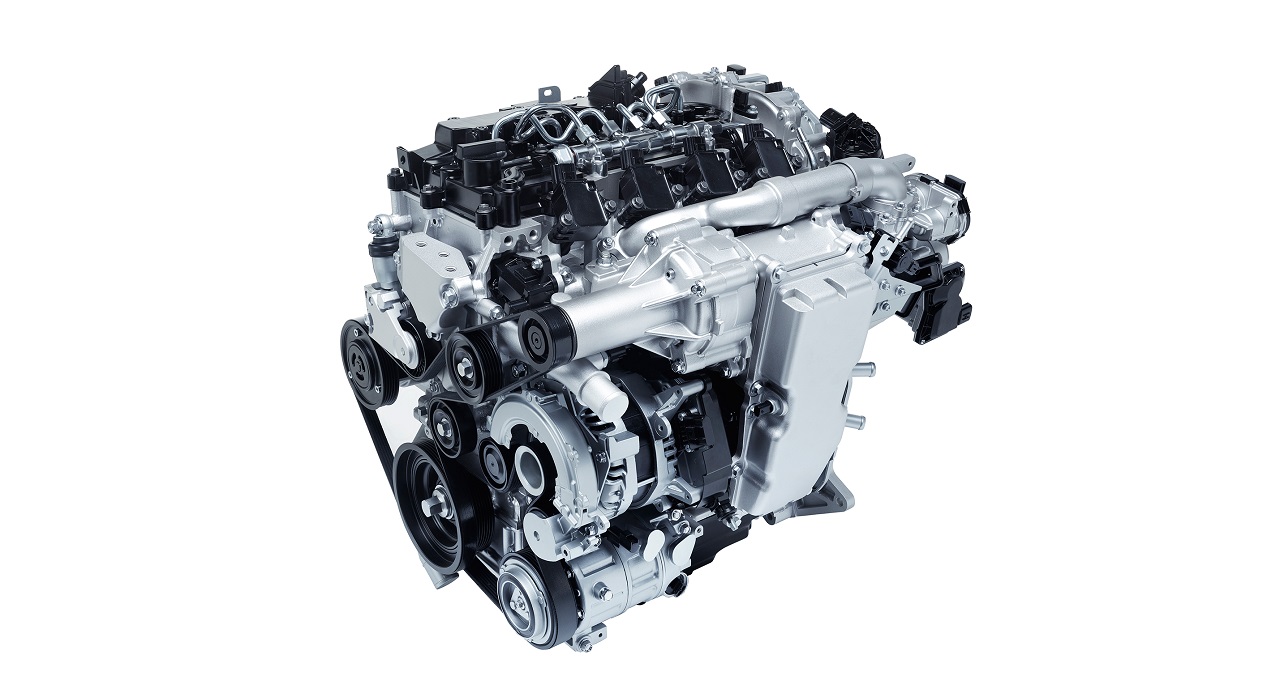
    Diesel-like fuel efficiency with the performance and character of a gasoline engine—Mazda’s new SkyActiv-X aims to combine the best of both worlds.

    At the Tokyo Motor Show last week, Mazda unveiled its latest engine technology. The SkyActiv-X promises significant efficiency improvements without compromising driving performance.

    Rather than being a hybrid or electric powertrain, the SkyActiv-X is a traditional internal combustion engine, with a major innovation. It is designed to deliver the torque and fuel economy of a diesel engine while maintaining the emissions profile and revving characteristics of a gasoline engine.

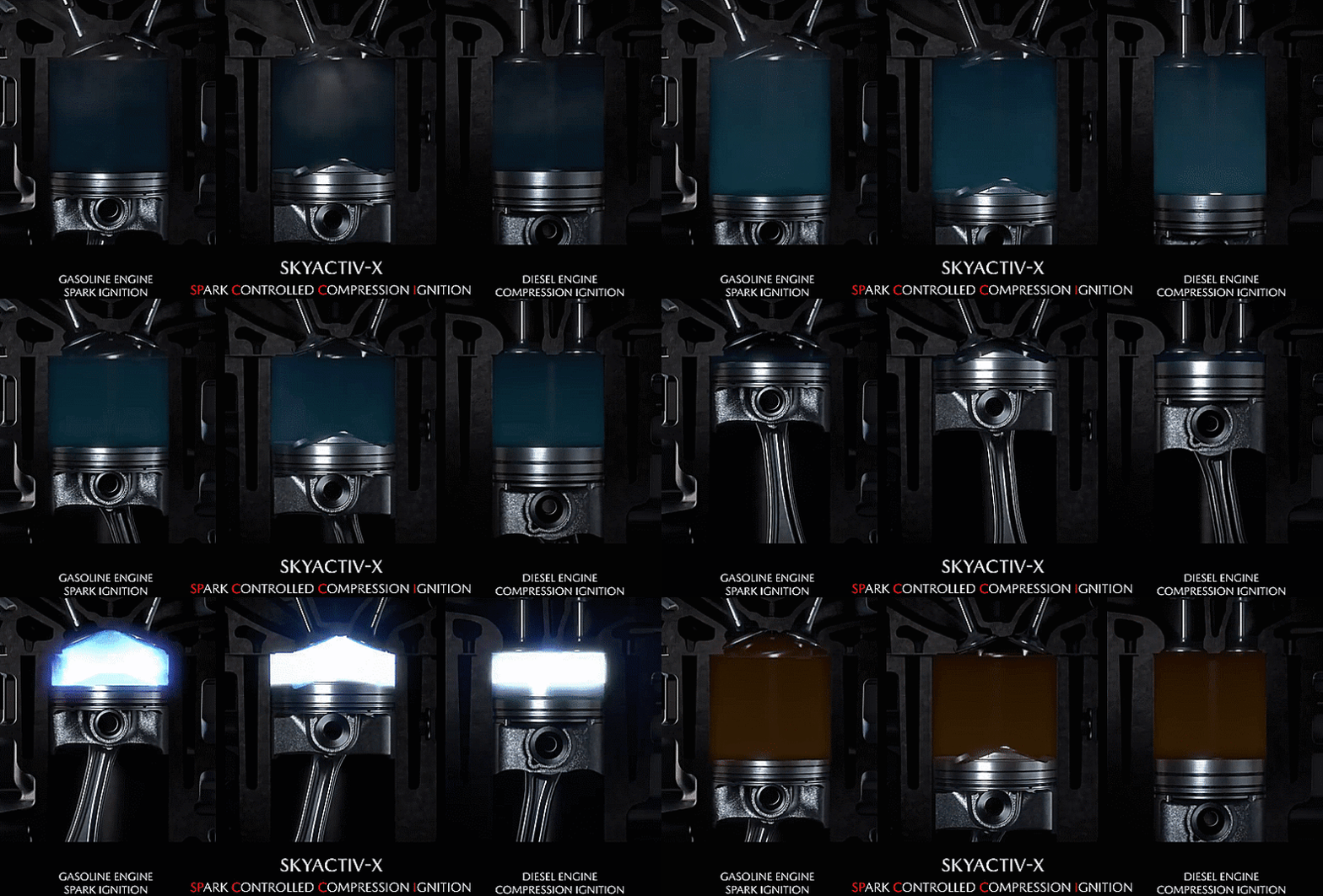
    Conventional gasoline and diesel engines operate differently. Gasoline engines (Otto-cycle engines) use spark plugs to ignite a mixture of fuel and air. Diesel engines, by contrast, compress air inside the cylinder before fuel is injected—causing spontaneous ignition through pressure alone.

    One key distinction is how combustion occurs. In gasoline engines, ignition begins at the spark plug. In diesel engines, compression ignition happens simultaneously at multiple points within the combustion chamber. This leads to faster, more complete combustion and reduces the amount of fuel needed to sustain operation.

    Mazda has effectively created a hybrid of these two combustion principles. The SkyActiv-X runs on gasoline but uses compression ignition similar to a diesel engine. This approach is based on homogeneous charge compression ignition (HCCI)—a concept related to jet-ignition systems used in motorsport applications such as Formula 1.

    Mazda refined the concept through a system it calls Spark Controlled Compression Ignition (SPCCI). A small spark plug is used to precisely control and initiate the compression-ignition process when needed. Because the window for compression ignition with gasoline is extremely narrow, the system must carefully regulate pressure, temperature, and air-fuel ratios to function reliably.

    The result is an engine that delivers diesel-like torque and fuel economy while retaining the high-revving nature and cleaner exhaust emissions typical of gasoline engines.

    Compared with Mazda’s most advanced conventional gasoline engines, the SkyActiv-X reportedly provides:

    • 10–30% higher torque

    • Around 20% better fuel economy

    • Improved throttle response

    Mazda announced that this compression-ignition engine—combining the strengths of both gasoline and diesel technologies—would enter production in 2020, debuting in the Mazda3.

    Reference:
    Mazda Announces Long-Term Vision for Technology Development, “Sustainable Zoom-Zoom 2030.”


    Cars Engines
    Share. Facebook Twitter Pinterest LinkedIn Tumblr Email Copy Link

    Related Posts

    Hologram-Like Technology Animates Objects Using Ultrasound Waves

    November 17, 2019

    Why Is Leaning Tower of Pisa Still Standing?

    May 21, 2018

    GM Turns to 3D Printing for Lightweight Parts and Designs

    May 16, 2018

    Chinese Satellite Uses Quantum Cryptography for Video Conference

    February 3, 2018

    Light slowed with sound in photonic chip breakthrough

    October 4, 2017

    A New Very Energy-Efficient Laser Technology: The Polariton Laser

    May 29, 2013
    Recent Posts
    • Oil Shocks, Policy Mistakes, and the Risk of a Second Inflation Wave (Part II)
    • Oil Shocks, Policy Mistakes, and the Risk of a Second Inflation Wave (Part I)
    • Microsoft Stored a Movie on Glass — And It Could Last Centuries
    • AI, Automatic Stabilizers & Inflation
    • Largest Battles in History: Cannae — Rome’s Darkest Day
    • The Day the Alliance Died
    • Evaluating Heart Disease: How Cumulative Diet Choices Compound Your Risk
    • What Would Happen If China Attacked Taiwan?
    • Geopoliticisation as a Structural Tailwind for Commodity Prices
    • America’s Economic Remodel: Who’s Really Paying the Bill?
    © 2025 Illustrated Curiosity

    Type above and press Enter to search. Press Esc to cancel.