Close Menu
Illustrated Curiosity | Economics, History, Science, Space, Technology, Health, Physics, Earth
    Facebook X (Twitter) Instagram YouTube
    Illustrated Curiosity | Economics, History, Science, Space, Technology, Health, Physics, Earth
    • Earth
    • Economics
    • Environment
      • Environmental Tech
      • Pollution
      • Wildlife
    • Health
      • Health Tech
      • Medicine
      • Nutrition
      • Exercise
    • History
      • Prehistory
      • Ancient History
      • Postclassical Era
      • Modern History
    • Humans
      • Human Brain
      • Psychology
    • Life
      • Animals & Plants
      • Genetics
      • Paleontology
      • Evolution
      • Genetic Engineering
    • Physics
    • Space
      • Astrobiology
      • Astronomy
      • Extrasolar Planets
      • Space Tech
      • Spaceflight
    • Technology
      • Artificial Intelligence
      • Energy
      • Engineering
      • Materials
      • Robotics
      • Vehicles
    Illustrated Curiosity | Economics, History, Science, Space, Technology, Health, Physics, Earth
    Home » Why Is Leaning Tower of Pisa Still Standing?
    Engineering

    Why Is Leaning Tower of Pisa Still Standing?

    May 21, 20182 Mins Read
    Illustration: Illustrated Curiosity
    Share
    Facebook Twitter LinkedIn Pinterest Email


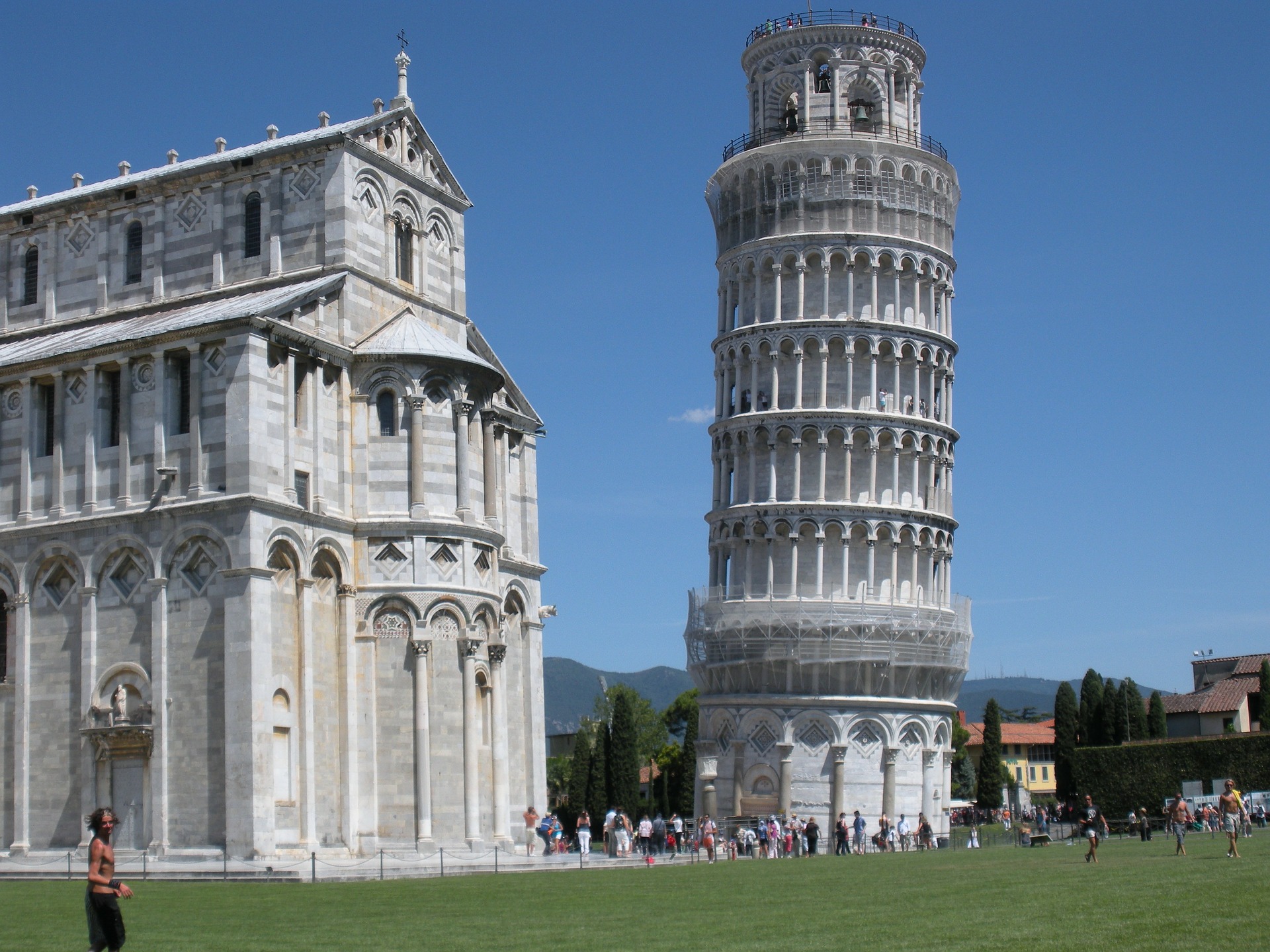
    How is it that the leaning tower of Pisa has been around for centuries, despite the fact that several powerful earthquakes have hit the area? A group of engineers believes they have found the answer.

    Sixteen engineers have tried to solve the mystery of the leaning tower in Pisa. The researchers from the University of Bristol have attempted to answer how it is that the 58-meter-high leaning tower with a five-degree slope has lasted this long, with at least four powerful earthquakes hitting the area since 1280.

    The researchers have looked closely at existing seismological, geotechnical, and structural data and believe that they have found a reasonable explanation for why the leaning tower has not been seriously damaged or collapsed due to the earthquakes. The phenomenon is known as dynamic soil-structure interaction (DSSI).

    It is the height and rigid structure of the tower in combination with the soft ground of the tower that has caused the tower to not be severely affected by the earthquakes.

    The tower’s extraordinary characteristics make it the most extreme example of DSSI yet discovered.

    “Ironically, the very same soil that caused the leaning instability and brought the Tower to the verge of collapse, can be credited for helping it survive these seismic events.”

    – Professor Mylonakis, Chair in Geotechnics and Soil-Structure Interaction, and Head of Earthquake and Geotechnical Engineering Research Group in the Department of Civil Engineering at the University of Bristol.

    The engineers’ results will be formally presented in June at a European Earthquake Technology Conference in Thessaloniki, Greece.

    Construction of the Tower of Pisa began on the tower in 1173 but was not completed until 1372. It began to sink into the soft soil shortly after work had progressed to the second floor, and there was a 100-year delay while Pisa battled with rival republics, including Genoa and Florence.

    Share. Facebook Twitter Pinterest LinkedIn Tumblr Email Copy Link

    Related Posts

    Hologram-Like Technology Animates Objects Using Ultrasound Waves

    November 17, 2019

    GM Turns to 3D Printing for Lightweight Parts and Designs

    May 16, 2018

    Chinese Satellite Uses Quantum Cryptography for Video Conference

    February 3, 2018

    Mazda’s Skyactiv-X Engine Burn Gasoline Using Diesel-Style Compression Ignition

    November 9, 2017

    Light slowed with sound in photonic chip breakthrough

    October 4, 2017

    A New Very Energy-Efficient Laser Technology: The Polariton Laser

    May 29, 2013
    Recent Posts
    • Oil Shocks, Policy Mistakes, and the Risk of a Second Inflation Wave (Part II)
    • Oil Shocks, Policy Mistakes, and the Risk of a Second Inflation Wave (Part I)
    • Microsoft Stored a Movie on Glass — And It Could Last Centuries
    • AI, Automatic Stabilizers & Inflation
    • Largest Battles in History: Cannae — Rome’s Darkest Day
    • The Day the Alliance Died
    • Evaluating Heart Disease: How Cumulative Diet Choices Compound Your Risk
    • What Would Happen If China Attacked Taiwan?
    • Geopoliticisation as a Structural Tailwind for Commodity Prices
    • America’s Economic Remodel: Who’s Really Paying the Bill?
    © 2025 Illustrated Curiosity

    Type above and press Enter to search. Press Esc to cancel.