Close Menu
Illustrated Curiosity
    Facebook X (Twitter) Instagram YouTube
    Illustrated Curiosity
    • Earth
    • Economics
    • Environment
      • Climate
      • Environmental Tech
      • Pollution
      • Wildlife
    • Health
      • Health Tech
      • Medicine
      • Nutrition
      • Exercise
    • History
      • Prehistory
      • Ancient History
      • Postclassical Era
      • Modern History
    • Humans
      • Human Brain
      • Psychology
    • Life
      • Animals & Plants
      • Genetics
      • Paleontology
      • Evolution
      • Genetic Engineering
    • Physics
    • Space
      • Astrobiology
      • Astronomy
      • Extrasolar Planets
      • Space Tech
      • Spaceflight
    • Technology
      • Artificial Intelligence
      • Energy
      • Engineering
      • Materials
      • Robotics
      • Vehicles
    Illustrated Curiosity
    Home » Making a Case for Returning Airships to the Skies
    Vehicles

    Making a Case for Returning Airships to the Skies

    August 29, 2019No Comments4 Mins Read
    Share
    Facebook Twitter LinkedIn Pinterest Email
    Lockheed Martin
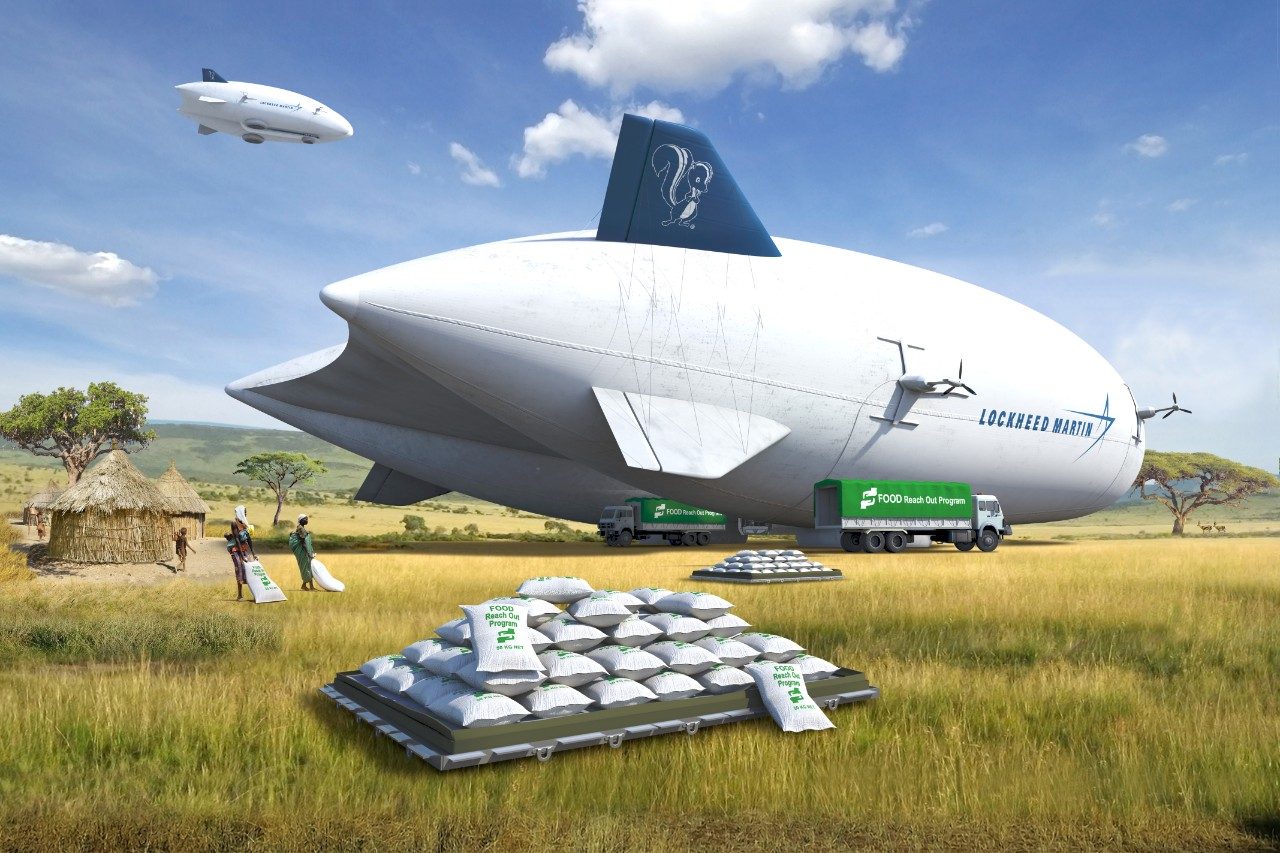
    The Lockheed Martin P-791 is an experimental aerostatic and aerodynamic hybrid airship, developed by Lockheed Martin.

    Modern technology, more accurate weather forecasts and a great need to reduce greenhouse gas emissions may once make the Airship relevant again.

    USS Los Angeles (ZR-3) flying over southern Manhattan Island, New York City (USA), 1930.

    Airships had its heyday at the beginning of the last century, but it came to an abrupt end with a severe accident in 1937, when the hydrogen-filled Zeppelin airship Hindenburg exploded at Lakehurst in New York. The airships were outcompeted by commercial aircraft shortly thereafter.

    The German passenger airship LZ 129 Hindenburg caught fire and was destroyed during its attempt to dock with its mooring mast at Naval Air Station Lakehurst. On board were 97 people (36 passengers and 61 crewmen); there were 36 fatalities (13 passengers and 22 crewmen, 1 worker on the ground). The disaster was the subject of newsreel coverage, photographs, and Herbert Morrison's recorded radio eyewitness reports from the landing field, which were broadcast the next day.
    The German passenger airship LZ 129 Hindenburg.

    Now scientists from Brazil, Germany, and Malaysia are arguing that hydrogen-filled airships should once again be used to traverse the globe, but for a whole different set of reasons.

    The transport sector is responsible for around 25 percent of global CO2 emissions caused by humans, today. Of these emissions, 3 percent come from cargo ships, but this figure is expected to increase by between 50 percent and 250 percent until 2050. These projections necessitate finding new approaches to transporting cargo with lower demand for energy and lower CO2 emissions.

    The hydrogen gas itself within the airship’s balloon is a valuable cargo in the near future, according to a new study led by Julian Hunt at the international research institute IIASA, in Austria. Hydrogen is an efficient way of storing energy from solar and wind production. The problem is that it takes a lot of energy to transport it.

    Hydrogen must be cooled down and converted to liquid form with high pressure. However, if you do not convert hydrogen into liquid form, you save up to 30% of the energy produced. The solution is hence, the airship. Filling it with hydrogen is what makes it fly, and at its final destination, the hydrogen can be used to power a fuel cell where the only exhaust gas becomes water.

    The lift capability of an airship is equal to the buoyant force minus the weight of the airship and based on specific lift (lifting force per unit volume of gas), the greatest static lift is provided by hydrogen (11.15 N/m3 or 71 lbf/1000 cu ft) with helium (10.37 N/m3 or 66 lbf/1000 cu ft) a close second.

    The problem with hydrogen, however, is still its reactive nature; the explosive reactions that may be triggered by spark, heat, or sunlight. But the international research group also has an answer to the risk of explosion; driverless airships and automated loading and unloading would reduce the risk of accidents. Airports are proposed to be located at remote locations and the airships would not be allowed to fly at low altitudes over cities.

    There is a lot of political pressure to reduce carbon dioxide emissions, and we must see a transition to a hydrogen-based economy, according to Julian Hunt, the lead author of the study.

    “Airships have been used in the past and provided great services to society. Due to current needs, airships should be reconsidered and returned to the skies. Our paper presents results and arguments in favor of this. The development of an airship industry will reduce the costs of fast delivery cargo shipping, particularly in regions far from the coast. The possibility to transport hydrogen without the need to liquefy it would reduce the costs for the development of a sustainable and hydrogen-based economy, ultimately increasing the feasibility of a 100 percent renewable world,”

    – Study lead-author Julian Hunt, IIASA post-doctoral fellow.

    This NASA visualization (see the 30-day animation by clicking), the fastest winds are in red; slower winds are in blue. Credit: NASA

    The authors propose that airships should harness the naturally occurring jet stream roaming around the planet. The jet stream is a core of strong winds that flows from west to east, around 8 to 12 kilometers above the Earth’s surface.

    According to the researchers, airships flying in the jet stream could reduce CO2 emissions and fuel consumption, as the jet stream itself would contribute most of the energy required to move the airship between destinations, resulting in a round trip of 16 days in the northern hemisphere, and 14 days in the southern hemisphere. This is considerably less time compared to current maritime shipping routes, particularly in the southern hemisphere.

    Reference:

    Julian David Hunt et al. Using the jet stream for sustainable airship and balloon transportation of cargo and hydrogen https://doi.org/10.1016/j.ecmx.2019.100016


    Share. Facebook Twitter Pinterest LinkedIn Tumblr Email Copy Link

    Related Posts

    The Rise of Range Extended Electric Vehicles (REEVs): A New Era of Hybrid Mobility

    February 6, 2025

    Across The Atlantic On Hydrogen? A Liquid Hydrogen Plane Paves Way for Zero Emission Flight

    December 12, 2021

    The Experimental Engine That Could Get Us Anywhere in the World in 2 Hours

    December 11, 2020

    What Can 6,000 Electric Vehicles Tell Us about Ev Battery Health?

    January 23, 2020

    Alaka’i Technologies Unveils Skai, a Hydrogen-Powered Air Taxi

    June 23, 2019

    Daimler and Bosch to Test Self-Driving Taxis Next Year

    July 20, 2018
    Recent Posts
    • How the End of Bretton Woods Reshaped Our Economies — and Our Politics
    • Can the U.S. Really Handle 250% Debt-to-GDP? Why Jackson Hole’s Daring Paper Is Wrong
    • Japan’s Fiscal Trap: What Happens If Austerity Is No Longer an Option?
    • The Rise of Range Extended Electric Vehicles (REEVs): A New Era of Hybrid Mobility
    • The Great Capital Rotation: A Shift from U.S. Treasuries to Gold and Real Assets
    • The Hidden Risks of Short-Term Debt: A Balancing Act in U.S. Fiscal Policy
    • The Looming U.S. Debt Spiral: Understanding the Risks
    • The Looming Recession: Seven Economic Indicators Flashing Red for 2025
    • Europa Clipper: NASA’s Mission to Unlock the Secrets of Jupiter’s Icy Moon
    • Could Hedge Funds Cause Chaos in the U.S. Treasury Market? And What About Inflation?
    © 2025 Illustrated Curiosity

    Type above and press Enter to search. Press Esc to cancel.

    This website uses cookies to improve your experience. We'll assume you're ok with this, but you can opt-out if you wish.Accept Reject Read More
    Privacy & Cookies Policy

    Privacy Overview

    This website uses cookies to improve your experience while you navigate through the website. Out of these, the cookies that are categorized as necessary are stored on your browser as they are essential for the working of basic functionalities of the website. We also use third-party cookies that help us analyze and understand how you use this website. These cookies will be stored in your browser only with your consent. You also have the option to opt-out of these cookies. But opting out of some of these cookies may affect your browsing experience.
    Necessary
    Always Enabled
    Necessary cookies are absolutely essential for the website to function properly. This category only includes cookies that ensures basic functionalities and security features of the website. These cookies do not store any personal information.
    Non-necessary
    Any cookies that may not be particularly necessary for the website to function and is used specifically to collect user personal data via analytics, ads, other embedded contents are termed as non-necessary cookies. It is mandatory to procure user consent prior to running these cookies on your website.
    SAVE & ACCEPT