Close Menu
Illustrated Curiosity | Economics, History, Science, Space, Technology, Health, Physics, Earth
    Facebook X (Twitter) Instagram YouTube
    Illustrated Curiosity | Economics, History, Science, Space, Technology, Health, Physics, Earth
    • Earth
    • Economics
    • Environment
      • Environmental Tech
      • Pollution
      • Wildlife
    • Health
      • Health Tech
      • Medicine
      • Nutrition
      • Exercise
    • History
      • Prehistory
      • Ancient History
      • Postclassical Era
      • Modern History
    • Humans
      • Human Brain
      • Psychology
    • Life
      • Animals & Plants
      • Genetics
      • Paleontology
      • Evolution
      • Genetic Engineering
    • Physics
    • Space
      • Astrobiology
      • Astronomy
      • Extrasolar Planets
      • Space Tech
      • Spaceflight
    • Technology
      • Artificial Intelligence
      • Energy
      • Engineering
      • Materials
      • Robotics
      • Vehicles
    Illustrated Curiosity | Economics, History, Science, Space, Technology, Health, Physics, Earth
    Home » Why did Julius Caesar wear a wreath on his head?
    Ancient History

    Why did Julius Caesar wear a wreath on his head?

    March 1, 20173 Mins Read
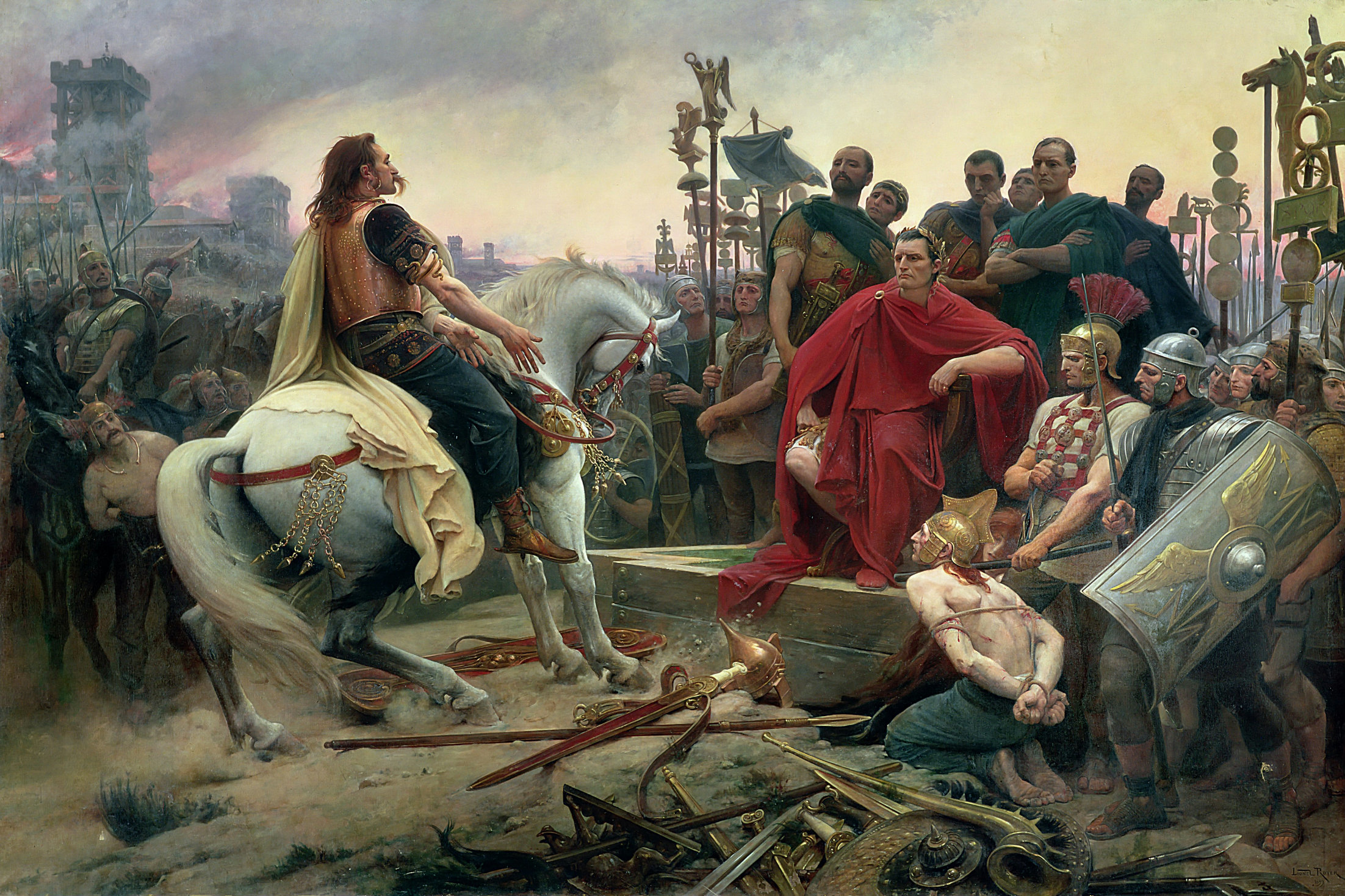
    The surrender of the Gallic chieftain Vercingetorix after the Battle of Alesia (52 BC). Image: Public Domain, via Wikipedia Commons
    Share
    Facebook Twitter LinkedIn Pinterest Email

    What does the wreath symbolize, as often seen depicted on Julius Caesar’s head?
    A leader’s headwear

    The Roman general Julius Caesar wore a wreath of laurel on his head to show that he was a powerful and strong leader.

    Just as the ancient Greeks and the Etruscans before them, the ancient Romans associated the laurel wreath with victory and success. They saw it as a badge of honor and were only given to a select few who had achieved something extraordinary.

    In Ancient Greece, wreaths were awarded to victors in both athletic competitions, including the ancient Olympics, and for military prowess. It was made of a wild olive tree known as “kotinos” (κότινος). In Greek mythology, Apollo is represented wearing a laurel wreath on his head. The Etruscans gave their kings thin gold wreaths.

    Julius Caesar

    Caesar received the wreath for his many victories on the battlefield. It was awarded to him at his triumphal procession through Rome in April, 46 BCE. A Roman triumph (triumphus) famous for its extravagance, hailing the commander for his victories in four wars: the war in Gaul, the war in Egypt, the war against Pharnaces of Pontus, and the war against King Juba of Numidia.

    The laurel wreath was normally worn only on the day of the triumph, but when Caesar was appointed dictator in 44 BCE, he was wearing the wreath again.

    According to the Roman author Suetonius, the wreath suited Caesar especially well with the green leaves hiding his balding head.

    The laurel wreath was not the Romans’ only badge of honor. They used many types of wreaths produced by different plants to reward their heroes.

    Still in use today

    Today, the term laureato is used in Italy to refer to any student who has graduated, and right after the graduation ceremony, the student receives a laurel wreath to wear for the rest of the day.

    A laurel wreath is also used to symbolize academic achievements in many other countries; in Finland, at the University of Helsinki, it is given during the ceremony of conferral for masters’ degree. At Reed College in Portland, Oregon, United States, members of the senior class receive laurel wreaths upon submitting their senior thesis in May. In Sweden, those receiving a doctorate or an honorary doctorate at the Faculty of Philosophy receive a laurel wreath during the ceremony of conferral of the degree.

    Often used as a motif in architecture, furniture, textiles, and in heraldry as well, it can often be seen in various coat of arms, as a charge in a shield, around the shield, or on top of it.

    Lastly, perhaps you have heard the expression “resting on one’s laurels”? A quite common idiom that refers to someone relying entirely on long-past successes for continued fame or recognition, where to “look to one’s laurels” means to be careful of losing rank to competition.


    Ancient Rome Julius Caesar
    Share. Facebook Twitter Pinterest LinkedIn Tumblr Email Copy Link

    Related Posts

    Largest Battles in History: Cannae — Rome’s Darkest Day

    January 25, 2026

    The Land Between: A Historical Overview of Israel, Judea, and Palestine

    January 9, 2023

    Augustus: The Quiet Architect of Empire

    October 28, 2022

    Native Americans of South America sailed to Polynesia in the 12th century

    July 27, 2020

    Oldest and Largest Maya Structure on Record Discovered in Southern Mexico

    June 22, 2020

    Archaeologists in Greece Find 3,500-Year-Old Royal Tombs

    December 23, 2019
    Recent Posts
    • Largest Battles in History: Cannae — Rome’s Darkest Day
    • The Day the Alliance Died
    • Evaluating Heart Disease: How Cumulative Diet Choices Compound Your Risk
    • What Would Happen If China Attacked Taiwan?
    • Geopoliticisation as a Structural Tailwind for Commodity Prices
    • America’s Economic Remodel: Who’s Really Paying the Bill?
    • Why Inflation May Be Preparing for a Second Act
    • How the End of Bretton Woods Reshaped Our Economies — and Our Politics
    • Can the U.S. Really Handle 250% Debt-to-GDP? Why Jackson Hole’s Daring Paper Is Wrong
    • Japan’s Fiscal Trap: What Happens If Austerity Is No Longer an Option?
    © 2025 Illustrated Curiosity

    Type above and press Enter to search. Press Esc to cancel.