Close Menu
Illustrated Curiosity
    Facebook X (Twitter) Instagram YouTube
    Illustrated Curiosity
    • Earth
    • Economics
    • Environment
      • Climate
      • Environmental Tech
      • Pollution
      • Wildlife
    • Health
      • Health Tech
      • Medicine
      • Nutrition
      • Exercise
    • History
      • Prehistory
      • Ancient History
      • Postclassical Era
      • Modern History
    • Humans
      • Human Brain
      • Psychology
    • Life
      • Animals & Plants
      • Genetics
      • Paleontology
      • Evolution
      • Genetic Engineering
    • Physics
    • Space
      • Astrobiology
      • Astronomy
      • Extrasolar Planets
      • Space Tech
      • Spaceflight
    • Technology
      • Artificial Intelligence
      • Energy
      • Engineering
      • Materials
      • Robotics
      • Vehicles
    Illustrated Curiosity
    Home » Scientists extract Neanderthal DNA from cave dirt
    Genetics

    Scientists extract Neanderthal DNA from cave dirt

    May 6, 20173 Mins Read
    Share
    Facebook Twitter LinkedIn Pinterest Email

    There are now new methods to find traces of ancient DNA, even in the absence of skeletal remains. Researchers at the Max Planck Institute in Germany have developed a new method to retrieve hominin DNA
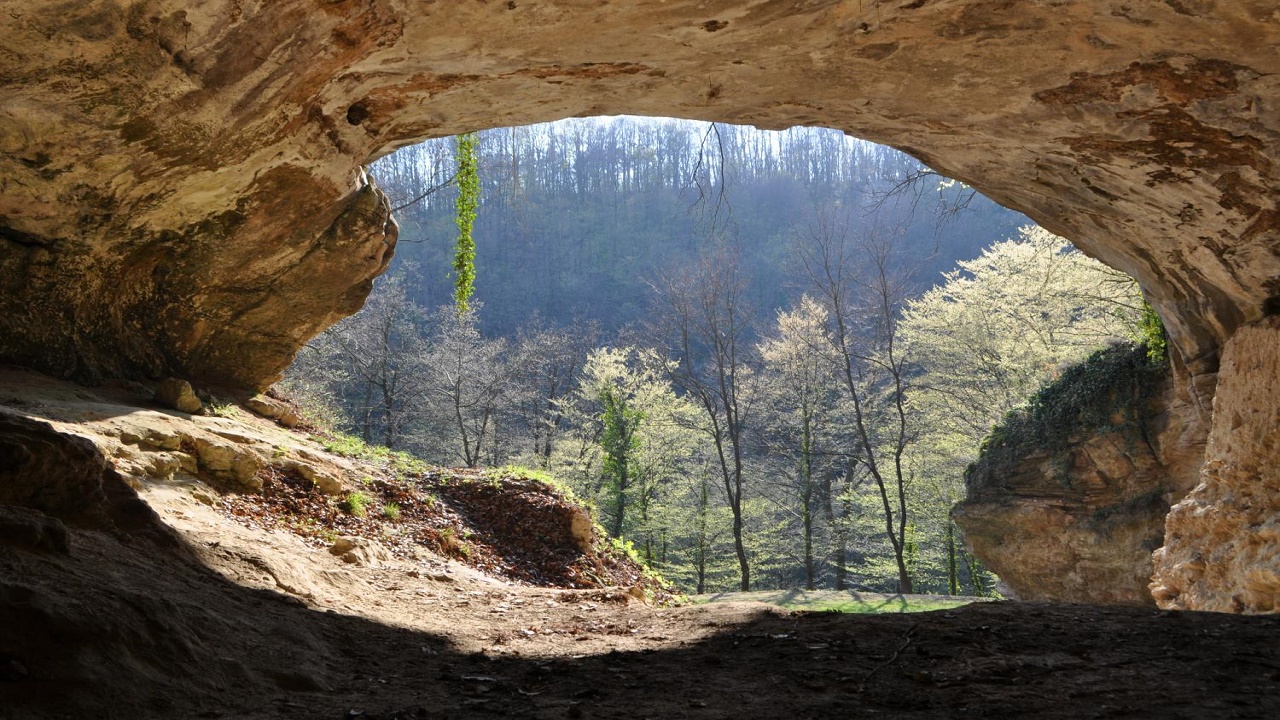
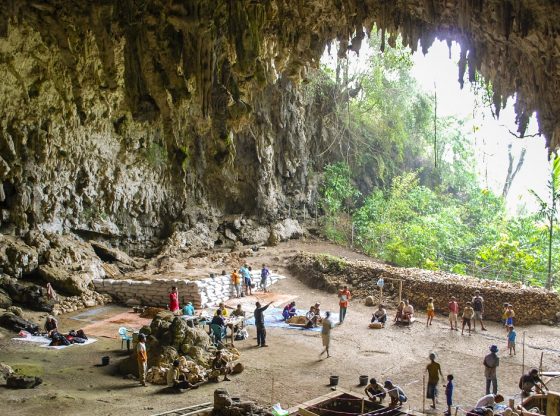
    Entrance to the archaeological site of Vindija Cave, Croatia. Credit: MPI f. Evolutionary Anthropology/ J. Krause

    Researchers of the Max Planck Institute for Evolutionary Anthropology in Leipzig, Germany, have looked into new ways to get hold of ancient human DNA. The researchers have been able to track down Neanderthal and Denisovian genes by simply digging up their ancient DNA from the ground.

    By retrieving hominin DNA from sediments, we can detect the presence of hominin groups at sites and in areas where this cannot be achieved with other methods,”

    – Professor Svante Pääbo, one of the researchers behind the study.

    From sediment samples collected at seven archaeological sites, the researchers were able to fish out fragments of mitochondrial DNA (mtDNA) that had once belonged to a variety of mammals, including our extinct human relatives.

    These 130,000-year-old sediment samples were taken from archeological sites where Neanderthal or denisovian presence is known or have been suspected. From, for example, caves in Europe and Russia. Some of which that contain tools and other human-made artifacts, but skeletal remains of ancient humans are rare or even non-existent.

    Svante Pääbo believes the discovered DNA is of ancient excrement and blood, that these people left behind in the caves. The DNA then binds to minerals in the soil, and the researchers are able to extract it from the particles.
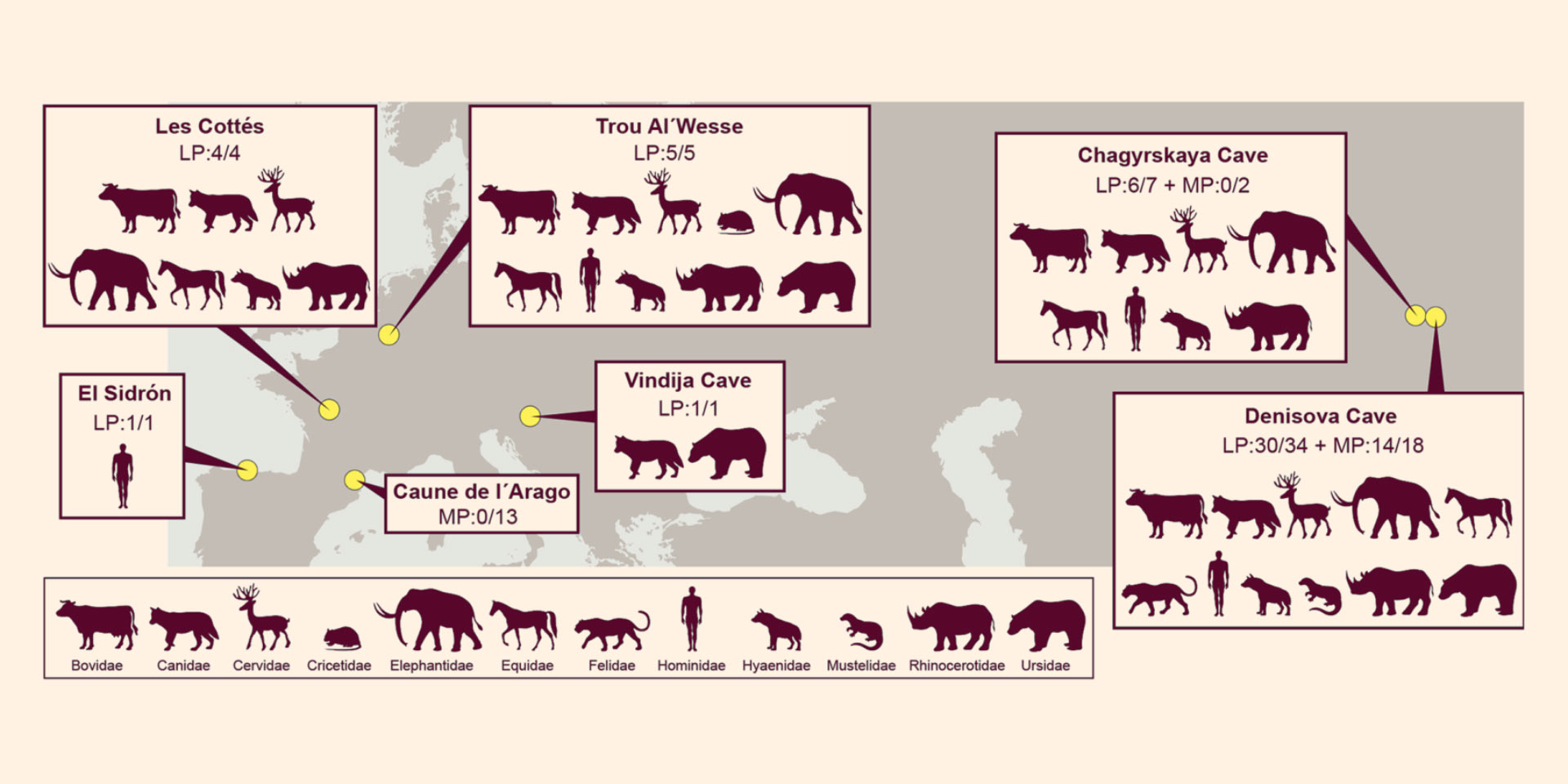
    Ancient species detected in Late Pleistocene (LP) and Middle Pleistocene (MP) samples from seven sites: for each time period, the fraction of samples containing DNA fragments which could be assigned to a mammalian family and authenticated to be of ancient origin is indicated; the shaded symbols representing each family are not to scale. Source: Slon et al, doi: 10.1126/science.aam9695.

    In addition to Neanderthals and Denisovan DNA, the researchers are also able to find the presence of 12 mammalian families, including extinct species such as the woolly mammoth, woolly rhinoceros, cave bear and cave hyena.

    “I think and hope this will become a standard method of archeology and paleontology in the future. By default, you will take sediment samples when doing excavations, to see which animals and people have lived in a certain place in the past”

    – Svante Pääbo.

    In 2010, another team led by Svante Pääbo sequenced the mitochondrial DNA from a finger found in a Russian cave named ‘Denisova Cave’ and then realized that it belonged to a previously unknown hominid. That was how the world discovered the existence of Denisovans, and we know more about them through their DNA than through their bones.

    This new technique could prove revolutionary, enabling researchers to discover ancient human ancestors without discovering a single skeleton remain. Archeologists and paleontologists are no longer dependent on finding skeletal remains to map the presence of early humans or animal activity and the recent discovery of 130,000-year-old human activity in the Americas would certainly appear especially well-matched.

    Reference:

    Viviane Slon et al., 2017. Neanderthal and denisovan dna from Pleistocene sediments. Science.
    Denisovan Homo Denisovan Homo Neanderthalensis Human Evolution Max Planck Institute Neanderthal
    Share. Facebook Twitter Pinterest LinkedIn Tumblr Email Copy Link

    Related Posts

    Northern Europeans’ Genetic Pre-Historic is Repeated Genocide

    February 6, 2024

    Prehistoric Europeans Consumed Milk Thousands of Years Before Lactose Tolerance

    July 31, 2022

    The Nobel Prize in Chemistry 2020 Was Awarded to Scientists for Work on Genome Editing

    October 7, 2020

    Ancient Footprints Show Neanderthals May Have Been Taller than Thought

    May 14, 2020

    Fascinating Discovery Suggests Neanderthals Invented String

    April 13, 2020

    Jawbone Fossil Reveals More About the Denisovans

    May 6, 2019
    Recent Posts
    • America’s Quiet Shift Into Fiscal Dominance: Why Inflation May Be Preparing for a Second Act
    • How the End of Bretton Woods Reshaped Our Economies — and Our Politics
    • Can the U.S. Really Handle 250% Debt-to-GDP? Why Jackson Hole’s Daring Paper Is Wrong
    • Japan’s Fiscal Trap: What Happens If Austerity Is No Longer an Option?
    • The Rise of Range Extended Electric Vehicles (REEVs): A New Era of Hybrid Mobility
    • The Great Capital Rotation: A Shift from U.S. Treasuries to Gold and Real Assets
    • The Hidden Risks of Short-Term Debt: A Balancing Act in U.S. Fiscal Policy
    • The Looming U.S. Debt Spiral: Understanding the Risks
    • The Looming Recession: Seven Economic Indicators Flashing Red for 2025
    • Europa Clipper: NASA’s Mission to Unlock the Secrets of Jupiter’s Icy Moon
    © 2025 Illustrated Curiosity

    Type above and press Enter to search. Press Esc to cancel.

    This website uses cookies to improve your experience. We'll assume you're ok with this, but you can opt-out if you wish.Accept Reject Read More
    Privacy & Cookies Policy

    Privacy Overview

    This website uses cookies to improve your experience while you navigate through the website. Out of these, the cookies that are categorized as necessary are stored on your browser as they are essential for the working of basic functionalities of the website. We also use third-party cookies that help us analyze and understand how you use this website. These cookies will be stored in your browser only with your consent. You also have the option to opt-out of these cookies. But opting out of some of these cookies may affect your browsing experience.
    Necessary
    Always Enabled
    Necessary cookies are absolutely essential for the website to function properly. This category only includes cookies that ensures basic functionalities and security features of the website. These cookies do not store any personal information.
    Non-necessary
    Any cookies that may not be particularly necessary for the website to function and is used specifically to collect user personal data via analytics, ads, other embedded contents are termed as non-necessary cookies. It is mandatory to procure user consent prior to running these cookies on your website.
    SAVE & ACCEPT