Scientists have discovered that tomato plants may be able to defend themselves in a surprisingly indirect—and dramatic—way: by triggering pests to turn on each other.
In a controlled laboratory experiment, a team of U.S. researchers found that caterpillar larvae feeding on tomato plants began exhibiting cannibalistic behavior after the plants were chemically “primed” to activate their natural defense systems. Instead of continuing to consume the plant, many of the larvae started attacking and eating one another.
A chemical defense mechanism
The study focused on the tomato plant, Solanum lycopersicum, which produces a defensive compound called methyl jasmonate when under attack. This substance is part of a broader plant signaling system that activates protective responses against herbivores.
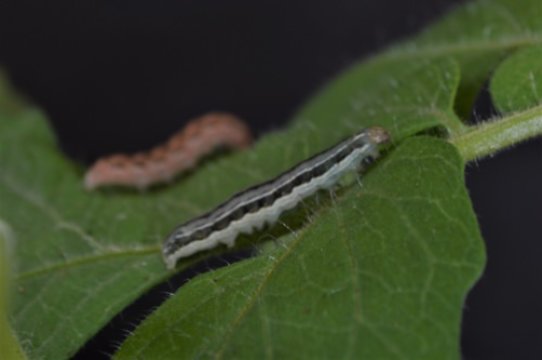
To simulate an attack, researchers treated tomato plants with methyl jasmonate, effectively switching on their defense mechanisms before exposing them to pests. They then introduced larvae of the Spodoptera exigua, a common agricultural pest known for feeding on a wide range of crops.
From plant-eating to cannibalism
After eight days, the researchers observed a striking behavioral shift. Not only did the larvae consume less of the tomato plants, but many began to attack and eat each other.
According to the researchers, this response benefits the plant in two important ways. First, cannibalism directly reduces the number of pests feeding on the plant. Second, even the surviving larvae consume significantly less plant material, further limiting the damage.
The mechanism behind this shift appears to be linked to changes in the plant’s chemistry. When the defense system is activated, the nutritional quality or chemical composition of the leaves changes, making them less appealing—or possibly more stressful—for the larvae. Under these conditions, the insects may turn to each other as an alternative food source.
A potential tool for sustainable agriculture
While the experiment was conducted in a laboratory setting, the findings open up intriguing possibilities for agriculture. If similar effects can be demonstrated in natural environments, farmers could potentially use plant defense signals like methyl jasmonate as a form of biological pest control.
Such an approach could reduce reliance on conventional pesticides by leveraging the plant’s own defense systems to suppress pest populations. In particular, inducing behaviors like cannibalism among herbivores could provide a highly targeted and environmentally friendly method of crop protection.
Next steps for research
The researchers emphasize that further studies are needed to determine whether this effect occurs under real-world field conditions, where environmental variables are more complex. Understanding how widespread and reliable this response is will be key to evaluating its practical applications.
Nonetheless, the study highlights the sophisticated and often unexpected ways in which plants interact with their environment—and how these natural mechanisms might be harnessed to improve sustainable farming practices.
The research was published in Nature Ecology & Evolution.
Reference:
John Orrock et al., Induced defences in plants reduce herbivory by increasing cannibalism, July 10, 2017. DOI: 10.1038/s41559-017-0231-6