Close Menu
Illustrated Curiosity | Economics, History, Science, Space, Technology, Health, Physics, Earth
    Facebook X (Twitter) Instagram YouTube
    Illustrated Curiosity | Economics, History, Science, Space, Technology, Health, Physics, Earth
    • Earth
    • Economics
    • Environment
      • Environmental Tech
      • Pollution
      • Wildlife
    • Health
      • Health Tech
      • Medicine
      • Nutrition
      • Exercise
    • History
      • Prehistory
      • Ancient History
      • Postclassical Era
      • Modern History
    • Humans
      • Human Brain
      • Psychology
    • Life
      • Animals & Plants
      • Genetics
      • Paleontology
      • Evolution
      • Genetic Engineering
    • Physics
    • Space
      • Astrobiology
      • Astronomy
      • Extrasolar Planets
      • Space Tech
      • Spaceflight
    • Technology
      • Artificial Intelligence
      • Energy
      • Engineering
      • Materials
      • Robotics
      • Vehicles
    Illustrated Curiosity | Economics, History, Science, Space, Technology, Health, Physics, Earth
    Home » The Most Detailed Pictures Ever of the Universe’s Nurseries
    Astronomy

    The Most Detailed Pictures Ever of the Universe’s Nurseries

    May 23, 20182 Mins Read
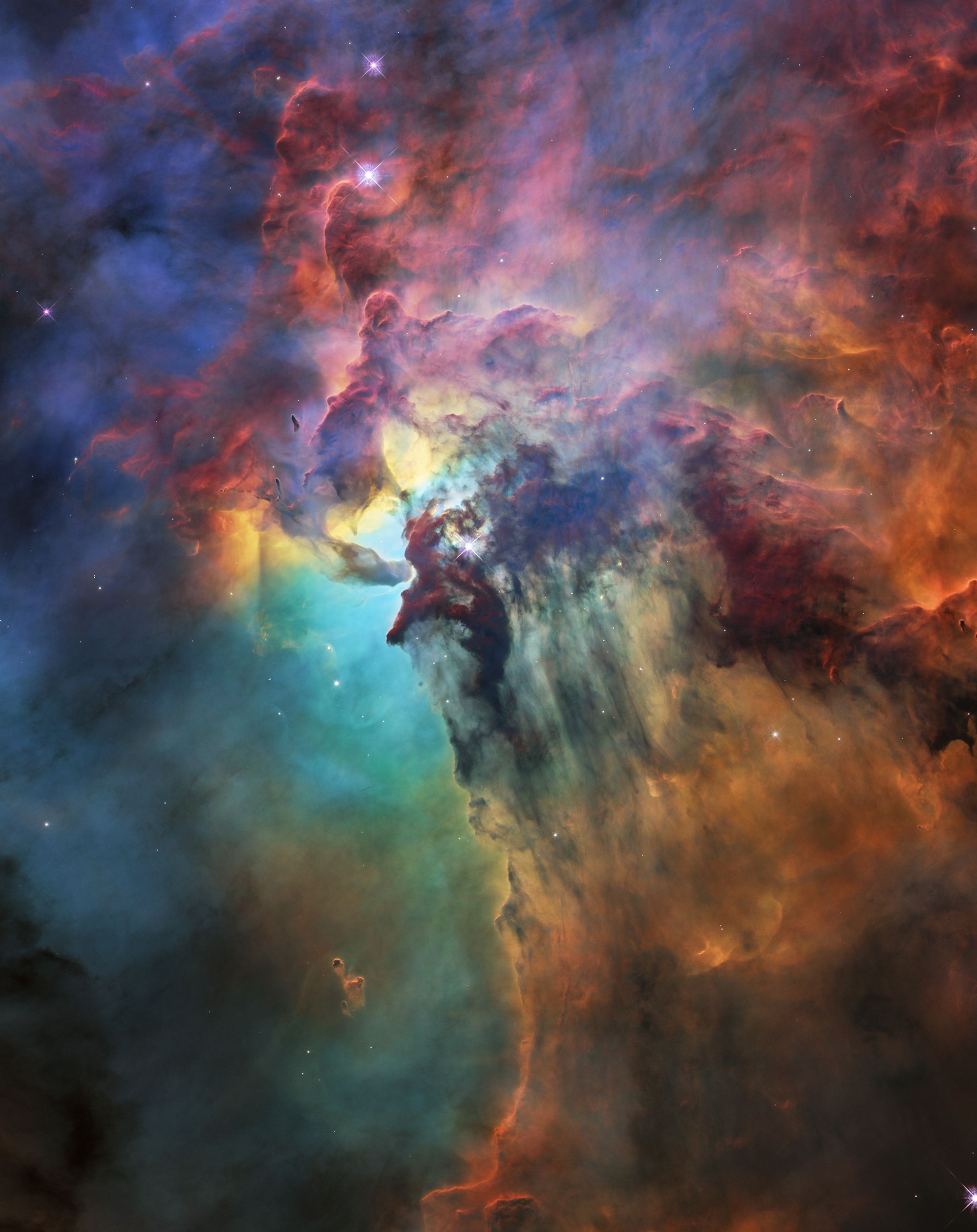
    Hubble's view of the heart of Lagoon Nebula. Image: NASA, Public Domain
    Share
    Facebook Twitter LinkedIn Pinterest Email

    Hubble is 28 years old and, to celebrate its big day, it shows us a nebula, the universe’s nursery, as we have never seen it before.

    Nebulae are huge areas of matter and gas where stars are born. A nearby nebula is the so-called Lagoon Nebula, and it is currently forming stars from densely packed gases and space ponds.

    The Hubble telescope has long photographed both nebulae as well as galaxies several billion years away. With the help of the new pictures taken by the Hubble telescope, we can now see places where star formation is happening more clearly than ever.

    NASA’s space telescope captures both ordinary light – light seen by us humans – and infrared light. Since Infrared light is absorbed to a lesser degree by the interstellar stuff on its way between the nebula and the Hubble telescope, it makes it possible to see through the fog.

    But since the infrared light can not completely absorb the substance, the astronomers can also see where the stars are in the nebula, depending on the size and temperature of the stars.

    The stars that appear to be redder have more matter in between them and the telescope and are therefore located deeper in the nebulae. The reverse is true for those stars that aren’t located as deeply in the nebulae, and therefore appear to be whiter. The astronomers used this data to create an animation that shows a colorful journey through the Lagoon Nebula.

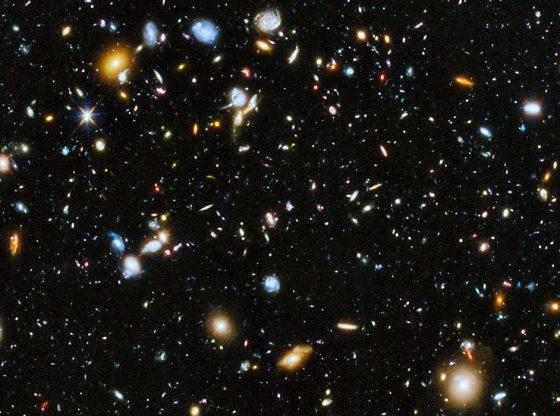
    Hubble was launched into space in 1990, and five years later, its first photos surprised a whole field of research. The telescope has since continued to deliver. The image called Hubble Deep Field showed 3,000 galaxies, and for the first time, astronomers got to see how these stars came into being at the beginning of the universe.

    Hubble has helped astronomers to explore more distant parts of space, galaxies, as well as Nebulae. The fact that it has been active in space for almost 30 years is remarkable,

    The telescope is planned to be active until 2025, but it will eventually break apart due to all the space junk constantly hitting it. Space can be a rather hostile place.
    Share. Facebook Twitter Pinterest LinkedIn Tumblr Email Copy Link

    Related Posts

    The James Webb Space Telescope DeliversThe Deepest Image of the Universe (yet)

    July 13, 2022

    There Is Now Rigorous Evidence for Water on the Moon

    November 2, 2020

    The Dwarf Planet Ceres Might Be Home to an Underground Ocean of Water

    August 12, 2020

    Mysterious Repeating Fast Radio Burst Traced to Nearby Galaxy

    January 13, 2020

    Mercury Transit 2019 4K UHD

    November 12, 2019

    A Second Interstellar Visitor Detected in Our Solar System

    September 20, 2019
    Recent Posts
    • The Day the Alliance Died
    • Evaluating Heart Disease: How Cumulative Diet Choices Compound Your Risk
    • What Would Happen If China Attacked Taiwan?
    • Geopoliticisation as a Structural Tailwind for Commodity Prices
    • America’s Economic Remodel: Who’s Really Paying the Bill?
    • Why Inflation May Be Preparing for a Second Act
    • How the End of Bretton Woods Reshaped Our Economies — and Our Politics
    • Can the U.S. Really Handle 250% Debt-to-GDP? Why Jackson Hole’s Daring Paper Is Wrong
    • Japan’s Fiscal Trap: What Happens If Austerity Is No Longer an Option?
    • The Rise of Range Extended Electric Vehicles (REEVs): A New Era of Hybrid Mobility
    © 2025 Illustrated Curiosity

    Type above and press Enter to search. Press Esc to cancel.