Close Menu
Illustrated Curiosity
    Facebook X (Twitter) Instagram YouTube
    Illustrated Curiosity
    • Earth
    • Economics
    • Environment
      • Climate
      • Environmental Tech
      • Pollution
      • Wildlife
    • Health
      • Health Tech
      • Medicine
      • Nutrition
      • Exercise
    • History
      • Prehistory
      • Ancient History
      • Postclassical Era
      • Modern History
    • Humans
      • Human Brain
      • Psychology
    • Life
      • Animals & Plants
      • Genetics
      • Paleontology
      • Evolution
      • Genetic Engineering
    • Physics
    • Space
      • Astrobiology
      • Astronomy
      • Extrasolar Planets
      • Space Tech
      • Spaceflight
    • Technology
      • Artificial Intelligence
      • Energy
      • Engineering
      • Materials
      • Robotics
      • Vehicles
    Illustrated Curiosity
    Home » A Massive Black Hole Found in a Small Galaxy
    Astronomy

    A Massive Black Hole Found in a Small Galaxy

    January 2, 20132 Mins Read
    Share
    Facebook Twitter LinkedIn Pinterest Email
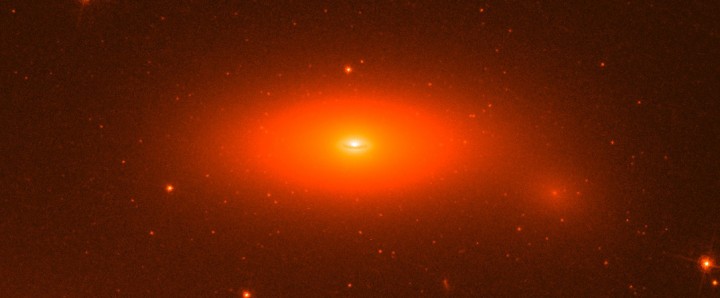
    The galaxy NGC 1277, as seen by the Hubble Space Telescope. The small, flattened galaxy has one of the biggest black holes ever found in its center, the equivalent of 17 billion suns. Image credit:: NASA / ESA / Andrew C. Fabian / Remco C. E. van den Bosch (MPIA)

    This newly found and the record-breaking black hole is heavier than 17 billions of our suns. It is the largest black hole ever discovered and if this doesn’t make it interesting enough, it resides in the middle of an unusually small galaxy.

    Science now indicates that certainly most, perhaps all, galaxies do harbor a black hole at its center and the black hole NGC 1277 is no exception. The black hole in its center amounts to more than half of all the mass in the galaxy’s central area.

    As a comparison to the black hole found in our own galaxy, the Milky Way, this hole is only about a tenth of the galaxy’s center mass. The NGC 1277 galaxy is thus breaking the rule that the larger the galaxy the greater the black hole. But with so many galaxies out there, and so few analyzed, we do not know yet if this is indeed a unique feature in the universe or not, this remains to be discovered.

    The small galaxy NGC 1277 lies in the constellation Perseus, about 230 million light-years away from us. Very far away indeed, even in astronomical references. NGC 1277 is very old and new stars stopped forming about 8 billion years ago.

    Team member Karl Gebhardt of the University of Texas at Austin said in a statement; “This is a really oddball galaxy,” “It’s almost all black hole. This could be the first object in a new class of galaxy-black hole systems.”.

    ______________
    http://www.utexas.edu/news/2012/11/28/astronomers-measure-most-massive-most-unusual-black-hole-using-hobby-eberly-telescope/
    ____________________________
    Black Hole Galaxies University of Texas
    Share. Facebook Twitter Pinterest LinkedIn Tumblr Email Copy Link

    Related Posts

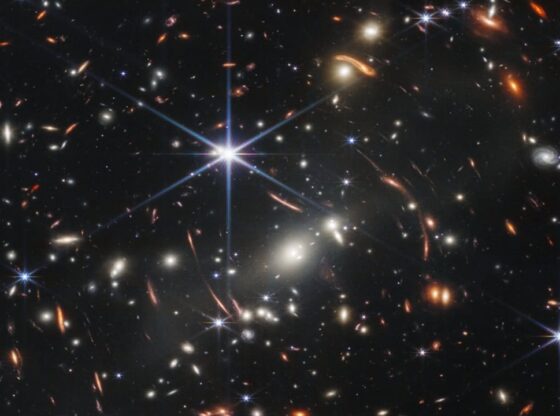
    The James Webb Space Telescope DeliversThe Deepest Image of the Universe (yet)

    July 13, 2022

    There Is Now Rigorous Evidence for Water on the Moon

    November 2, 2020

    The Dwarf Planet Ceres Might Be Home to an Underground Ocean of Water

    August 12, 2020

    Mysterious Repeating Fast Radio Burst Traced to Nearby Galaxy

    January 13, 2020

    Mercury Transit 2019 4K UHD

    November 12, 2019

    2019 Physics Nobel Awarded to 3 Scientists for Discoveries in Cosmology

    October 8, 2019
    Recent Posts
    • America’s Quiet Shift Into Fiscal Dominance: Why Inflation May Be Preparing for a Second Act
    • How the End of Bretton Woods Reshaped Our Economies — and Our Politics
    • Can the U.S. Really Handle 250% Debt-to-GDP? Why Jackson Hole’s Daring Paper Is Wrong
    • Japan’s Fiscal Trap: What Happens If Austerity Is No Longer an Option?
    • The Rise of Range Extended Electric Vehicles (REEVs): A New Era of Hybrid Mobility
    • The Great Capital Rotation: A Shift from U.S. Treasuries to Gold and Real Assets
    • The Hidden Risks of Short-Term Debt: A Balancing Act in U.S. Fiscal Policy
    • The Looming U.S. Debt Spiral: Understanding the Risks
    • The Looming Recession: Seven Economic Indicators Flashing Red for 2025
    • Europa Clipper: NASA’s Mission to Unlock the Secrets of Jupiter’s Icy Moon
    © 2025 Illustrated Curiosity

    Type above and press Enter to search. Press Esc to cancel.

    This website uses cookies to improve your experience. We'll assume you're ok with this, but you can opt-out if you wish.Accept Reject Read More
    Privacy & Cookies Policy

    Privacy Overview

    This website uses cookies to improve your experience while you navigate through the website. Out of these, the cookies that are categorized as necessary are stored on your browser as they are essential for the working of basic functionalities of the website. We also use third-party cookies that help us analyze and understand how you use this website. These cookies will be stored in your browser only with your consent. You also have the option to opt-out of these cookies. But opting out of some of these cookies may affect your browsing experience.
    Necessary
    Always Enabled
    Necessary cookies are absolutely essential for the website to function properly. This category only includes cookies that ensures basic functionalities and security features of the website. These cookies do not store any personal information.
    Non-necessary
    Any cookies that may not be particularly necessary for the website to function and is used specifically to collect user personal data via analytics, ads, other embedded contents are termed as non-necessary cookies. It is mandatory to procure user consent prior to running these cookies on your website.
    SAVE & ACCEPT