Close Menu
Illustrated Curiosity
    Facebook X (Twitter) Instagram YouTube
    Illustrated Curiosity
    • Earth
    • Economics
    • Environment
      • Climate
      • Environmental Tech
      • Pollution
      • Wildlife
    • Health
      • Health Tech
      • Medicine
      • Nutrition
      • Exercise
    • History
      • Prehistory
      • Ancient History
      • Postclassical Era
      • Modern History
    • Humans
      • Human Brain
      • Psychology
    • Life
      • Animals & Plants
      • Genetics
      • Paleontology
      • Evolution
      • Genetic Engineering
    • Physics
    • Space
      • Astrobiology
      • Astronomy
      • Extrasolar Planets
      • Space Tech
      • Spaceflight
    • Technology
      • Artificial Intelligence
      • Energy
      • Engineering
      • Materials
      • Robotics
      • Vehicles
    Illustrated Curiosity
    Home » Reserach show Earth is bombarded at random
    Astronomy

    Reserach show Earth is bombarded at random

    March 12, 2017No Comments2 Mins Read
    Share
    Facebook Twitter LinkedIn Pinterest Email

    Asteroids collisions with Earth are completely random, researchers at Lund University and the ETH Zurich in a new study.
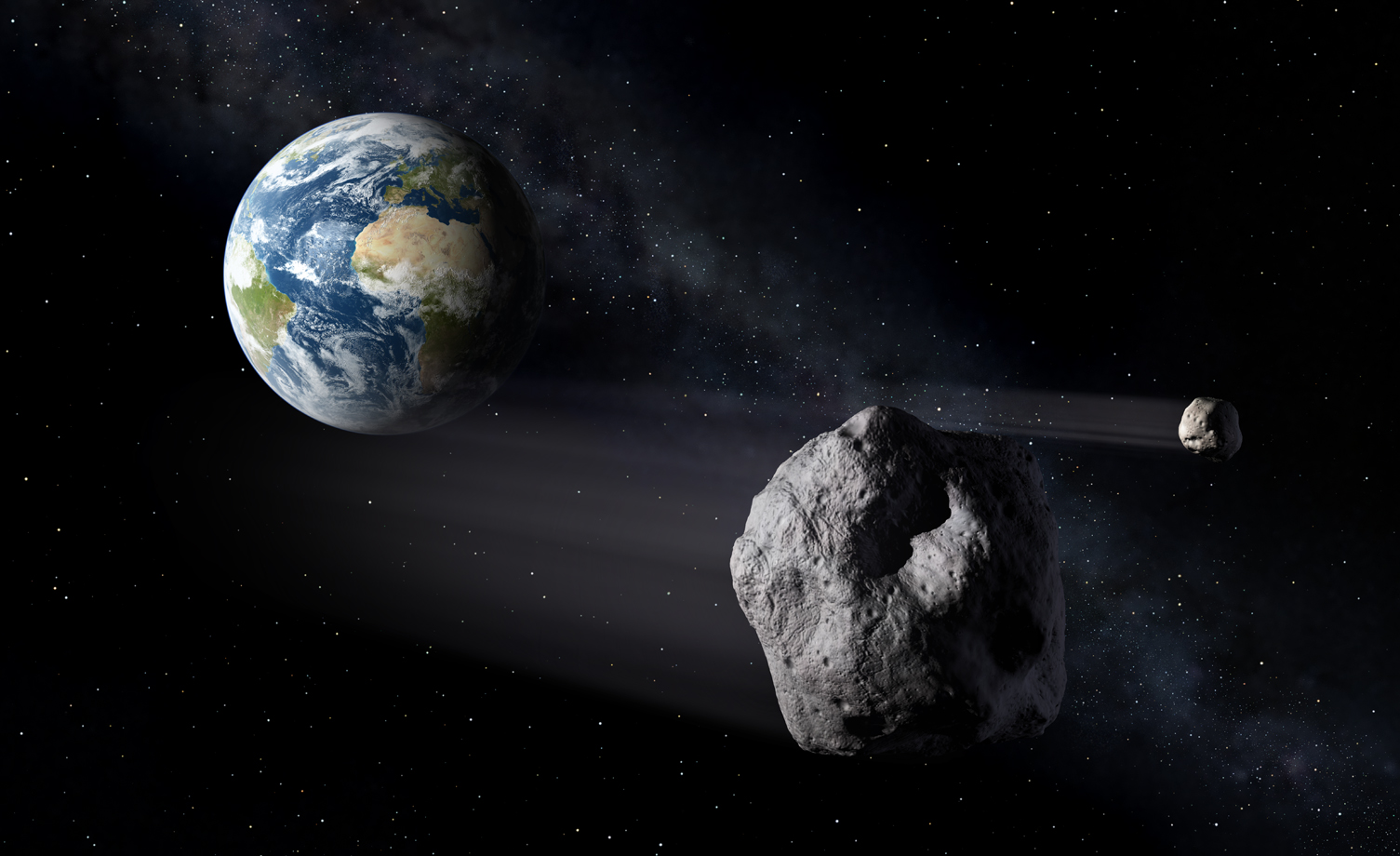
    Credits: NASA

    The question is whether there is any regularity in asteroid impacts on Earth; a study from 2015 (Rampino & Caldeira) indicated a periodicity of 26 million years between major asteroid impacts and following mass extinctions.

    This study is now under scrutiny as Swedish and Swiss researchers have concluded that there is no periodic interval of 26 million years between impacts, or any other interval for that matter.

    The 2015 study used so-called circular spectral analysis (CSA) of the terrestrial impact cratering record over the past 260 million years (Ma). But for some of the impacts in that analysis, new accurate and high-precision 40Ar-39Ar ages have recently been published, resulting in significant age shifts.

    The Swedish and Swiss researchers also used CFA to analyze the terrestrial impact cratering record of asteroid impacts on Earth for the past 500 million years, but they used the new updated impact age list over the past 260 million years and conclude that there is currently no evidence for periodicity in the impact record.

    “As we have shown, caution is required when searching for periodicities in the impact record using the CSA method. Our CSA of an updated version of the list by Rampino & Caldeira (2015) already shows a much less significant peak at a period of ∼26 Ma, after only a few changes motivated by recently revised impact ages. Furthermore, a CSA conducted on a list composed exclusively of robust impact ages (compiled by Jourdan et al. 2009; Jourdan 2012; Jourdan et al. 2012 and extended here) over the last 260 and 500 Ma does not reveal any significant periodicity either. This can be used to exclude that more than 80 percent of the impacts in the last 260 Ma have been produced by a periodic component.”

    The research study has been published in the journal Monthly Notices of the Royal Astronomical Society.

    Reference:

    Matthias M. M. Meier, Sanna Holm-Alwmark A tale of clusters: no resolvable periodicity in the terrestrial impact cratering record
    Asteroid Crater Extinction Events Meteorites
    Share. Facebook Twitter Pinterest LinkedIn Tumblr Email Copy Link

    Related Posts

    The James Webb Space Telescope DeliversThe Deepest Image of the Universe (yet)

    July 13, 2022

    There Is Now Rigorous Evidence for Water on the Moon

    November 2, 2020

    The Dwarf Planet Ceres Might Be Home to an Underground Ocean of Water

    August 12, 2020

    Mysterious Repeating Fast Radio Burst Traced to Nearby Galaxy

    January 13, 2020

    Mercury Transit 2019 4K UHD

    November 12, 2019

    2019 Physics Nobel Awarded to 3 Scientists for Discoveries in Cosmology

    October 8, 2019
    Recent Posts
    • How the End of Bretton Woods Reshaped Our Economies — and Our Politics
    • Can the U.S. Really Handle 250% Debt-to-GDP? Why Jackson Hole’s Daring Paper Is Wrong
    • Japan’s Fiscal Trap: What Happens If Austerity Is No Longer an Option?
    • The Rise of Range Extended Electric Vehicles (REEVs): A New Era of Hybrid Mobility
    • The Great Capital Rotation: A Shift from U.S. Treasuries to Gold and Real Assets
    • The Hidden Risks of Short-Term Debt: A Balancing Act in U.S. Fiscal Policy
    • The Looming U.S. Debt Spiral: Understanding the Risks
    • The Looming Recession: Seven Economic Indicators Flashing Red for 2025
    • Europa Clipper: NASA’s Mission to Unlock the Secrets of Jupiter’s Icy Moon
    • Could Hedge Funds Cause Chaos in the U.S. Treasury Market? And What About Inflation?
    © 2025 Illustrated Curiosity

    Type above and press Enter to search. Press Esc to cancel.

    This website uses cookies to improve your experience. We'll assume you're ok with this, but you can opt-out if you wish.Accept Reject Read More
    Privacy & Cookies Policy

    Privacy Overview

    This website uses cookies to improve your experience while you navigate through the website. Out of these, the cookies that are categorized as necessary are stored on your browser as they are essential for the working of basic functionalities of the website. We also use third-party cookies that help us analyze and understand how you use this website. These cookies will be stored in your browser only with your consent. You also have the option to opt-out of these cookies. But opting out of some of these cookies may affect your browsing experience.
    Necessary
    Always Enabled
    Necessary cookies are absolutely essential for the website to function properly. This category only includes cookies that ensures basic functionalities and security features of the website. These cookies do not store any personal information.
    Non-necessary
    Any cookies that may not be particularly necessary for the website to function and is used specifically to collect user personal data via analytics, ads, other embedded contents are termed as non-necessary cookies. It is mandatory to procure user consent prior to running these cookies on your website.
    SAVE & ACCEPT