
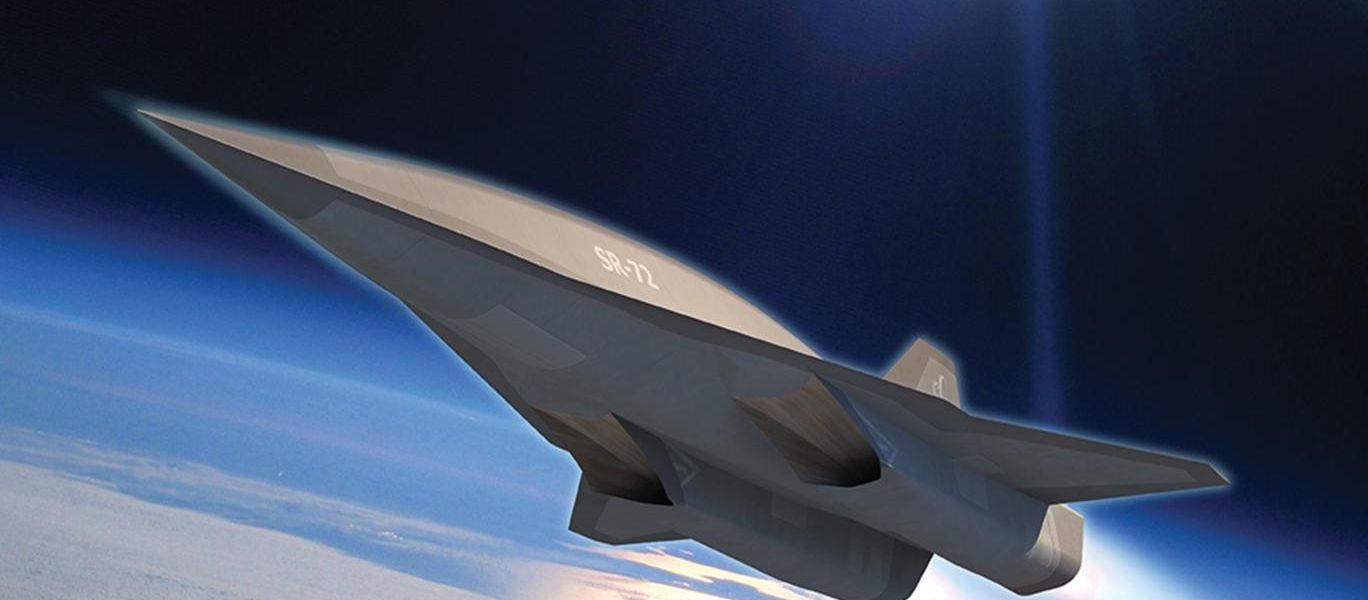
The American SR-71 “Blackbird” plane is legendary. But when it was retired in 1998, no replacement was ready. Now, Boeing presents an heir to the SR-71.
When Lockheed Martin developed its SR-71 in the 60’s, the goal was to establish an “invisible” plan. The aircraft was ordered by the Central Intelligence Agency (CIA) when the agency required a fast and secret spy plane that would replace Lockheed’s relatively slow U-2, famous for photographing missiles on Cuba during the Cuban Missile Crisis.
The development resulted in The SR-71 “Blackbird”, that served with the U.S. Air Force from 1964 to 1998. It was designed for supersonic flight at over Mach 3 with a flight crew of two in tandem cockpits, with the pilot in the forward cockpit and the reconnaissance systems officer operating the surveillance systems and equipment from the rear cockpit.
A total of 32 aircraft were built; 12 were lost in accidents, but none was lost to enemy action. It was the world’s fastest and highest-flying operational manned aircraft throughout its career.
When the U.S. airforce eventually retired the Blackbird, it left a hole in the “portfolio” of abilities. Lockheed and its Skunk Works division is committed to developing a replacement, but the competitor Boeing is also aspiring to get the lucrative contract by the U.S department of defense.
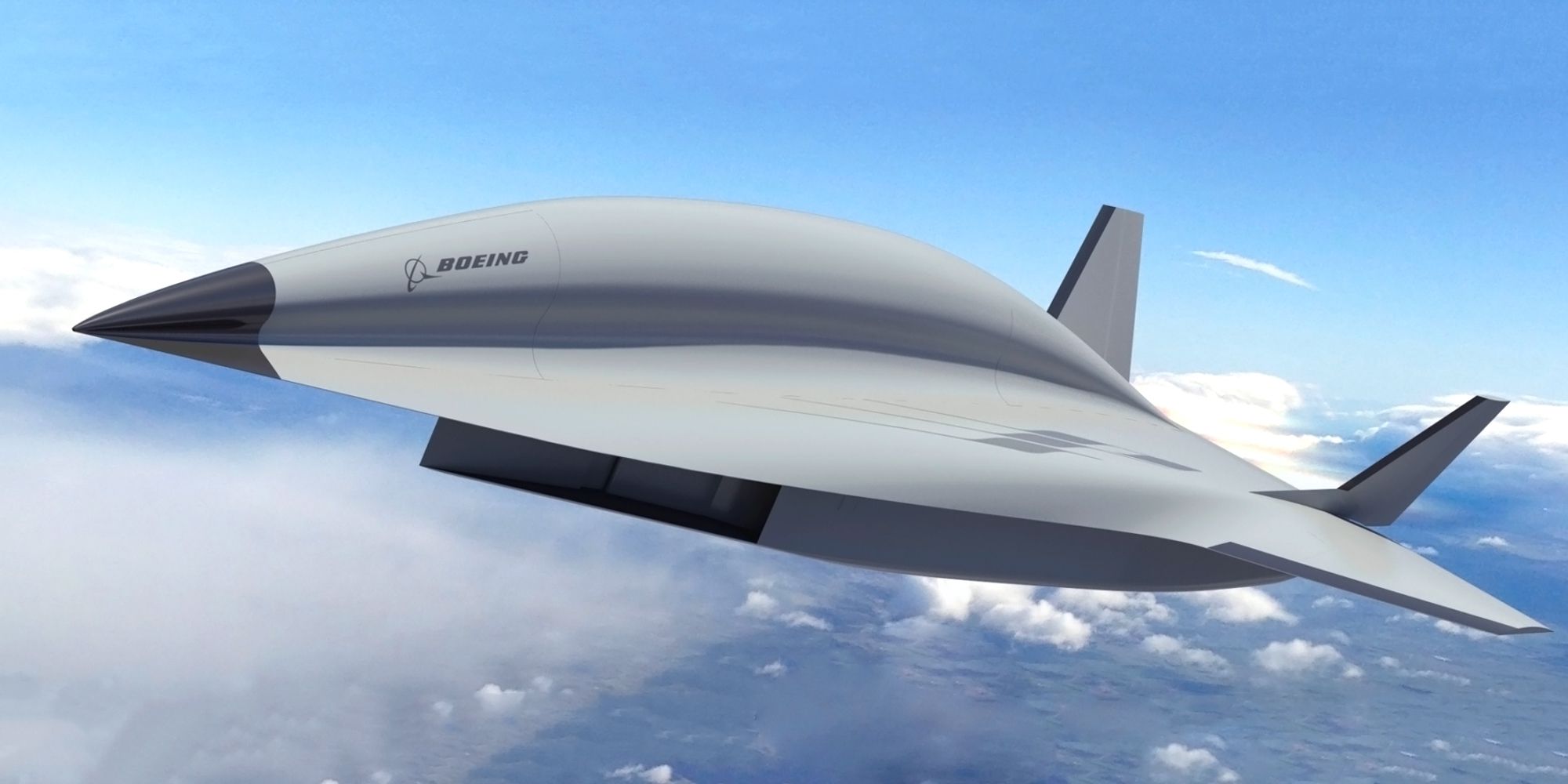
Boeing now reveals their concept called ‘Son of Blackbird’. The new plane will be able to cope with hypersonic flight at Mach 5, or 6,125 km/h (3,806 mph). It will thereby be fast enough to evade most ground-fired missiles and fighter missiles.
The design study that Boeing revealed at the American Institute of Aeronautics and Astronautics (AIAA SciTech Forum) is an early concept version. The model, a form of delta-wing with double tail fins, may thus change. And Boeing is well aware of the challenges of building a plan that can achieve these extreme speeds for any prolonged duration of time.
“It’s a really hard problem to develop an aircraft that takes off and accelerates through Mach 1 all the way to Mach 5 and beyond,”
“The specific impulse of an air-breathing engine goes down with increasing velocity, so you have to make the engine bigger to get to Mach 5. But doing that means a bigger inlet and a bigger nozzle, and trying to get that through Mach 1 is harder.”
– Boeing chief scientist for hypersonics told Aerospace Daily & Defense Report a few days ago.
Boeing will build a one-engine plane at the size of a fighter plane to test if the design. Then, a full-sized double-engine prototype. The defense giant will use the experience gained in developing the unmanned ‘X43’ and ‘X51’ hypersonic experimental aircrafts.
The Boeing and NASA experimental ‘X-43’ hypersonic aircraft is the current record-holder for being the fastest aircraft in history after reaching a speed of Mach 9.6, 11,850 km/h or 7,310 mph. The craft was created to develop and test a supersonic-combustion ramjet, or “scramjet” engine, where external combustion takes place with air flowing at supersonic speeds.
The Boeing X-51 ‘Waverider’ is initially propelled by an MGM-140 ATACMS solid rocket booster to approximately Mach 4.5 (3,000 mph; 4,800 km/h). The booster is then jettisoned and the vehicle’s Pratt & Whitney Rocketdyne SJY61 scramjet accelerates it to a top flight speed near Mach 6 (4,000 mph; 6,400 km/h).
The ‘Son of Blackbird’ would need to take off under its own power, accelerate through Mach 1 and up to above Mach 5, and then slow back down and land, a very difficult engineering challenge to tackle. Both Boeing and Lockheed Martin are studying Rocket-Based Combined Cycle propulsion (TBCC) engines along with Orbital ATK and Aerojet Rocketdyne.
A scale model of the design can be seen below.
@Boeing takes wraps off Mach 5+ hypersonic ‘son of Blackbird’ contender at #AIAASciTech pic.twitter.com/P9fkfq5Xgx
— Guy Norris (@AvWeekGuy) 10 januari 2018
A so-called TBCC engine is a combination propulsion system that consists of a ramjet, scramjet, and ducted rocket, where all three systems use a shared flow path. The ‘Son of Blackbird’ would use a conventional turbojet to achieve speeds up to about Mach 3, the limit for a turbojet, and then transition to a dual ramjet/scramjet, which must be traveling at speeds over Mach 3 to work properly. The ramjet/scramjet would then carry an aircraft to speeds over Mach 5.
There’s no telling if and when the ‘Son of BlackBird’ will ever see the light of day. In a best-case scenario, the concept design will become an actual aircraft sometime in the late 2020s. All the same, Boeing does have some competition as Lockheed is currently working on its own concept designs for a hypersonic aircraft.