Close Menu
Illustrated Curiosity
    Facebook X (Twitter) Instagram YouTube
    Illustrated Curiosity
    • Earth
    • Economics
    • Environment
      • Climate
      • Environmental Tech
      • Pollution
      • Wildlife
    • Health
      • Health Tech
      • Medicine
      • Nutrition
      • Exercise
    • History
      • Prehistory
      • Ancient History
      • Postclassical Era
      • Modern History
    • Humans
      • Human Brain
      • Psychology
    • Life
      • Animals & Plants
      • Genetics
      • Paleontology
      • Evolution
      • Genetic Engineering
    • Physics
    • Space
      • Astrobiology
      • Astronomy
      • Extrasolar Planets
      • Space Tech
      • Spaceflight
    • Technology
      • Artificial Intelligence
      • Energy
      • Engineering
      • Materials
      • Robotics
      • Vehicles
    Illustrated Curiosity
    Home » Germany To Build 400 Hydrogen Stations
    Vehicles

    Germany To Build 400 Hydrogen Stations

    October 3, 2013No Comments2 Mins Read
    Share
    Facebook Twitter LinkedIn Pinterest Email
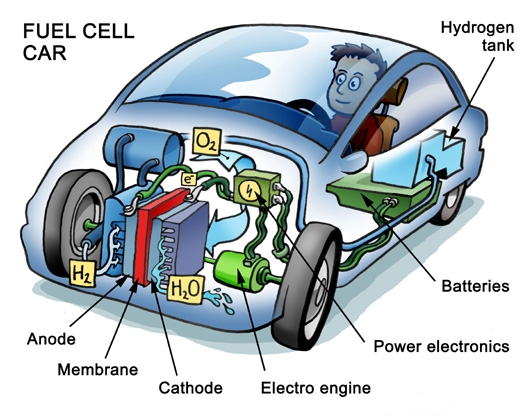
    Cutaway illustration of a fuel cell car. Credit: Weller.

    A total of 400 filling stations for hydrogen-powered cars will be built in Germany during the next 10 years. The idea is to provide hydrogen every 90 kilometers (56 miles) along the highways in densely populated areas.

    H2mobility

    The automaker Daimler, several oil companies, Shell, Total and OMV and two gas companies Air Liquide and Linde are all spearheading the initiative called H2mobility. With a goal of having built an additional 400 public hydrogen filling stations in Germany by the year 2023.

    The first phase consists of 100 refueling stations over the next four years. Built within all the major metropolitan areas, such as Berlin, Hamburg, Frankfurt, Stuttgart, and Munich. For each of these, there are to be at least ten filling stations.

    The scope of the initiative can be compared to the only 15 public hydrogen filling stations that exist in Germany today.

    Hydrogen is on the Move

    Other countries that are at the forefront of the hydrogen boom are Japan, South Korea, the United Kingdom and the United States. California stands out for the latter of these.
    California decided last week to invest in a network of 100 hydrogen stations. And at the beginning of the year, the UK presented a plan to have built about 1,000 stations by the year 2030.

    A Fuel of the Future?

    This investment spree should be seen in the context of future availability of hydrogen cars. With several more carmakers planning to start production of fuel cell cars in 2015. Among these are some of the largest automakers in the world, such as Hyundai, Toyota, Honda, Mercedes, Nissan, Ford and General Motors.

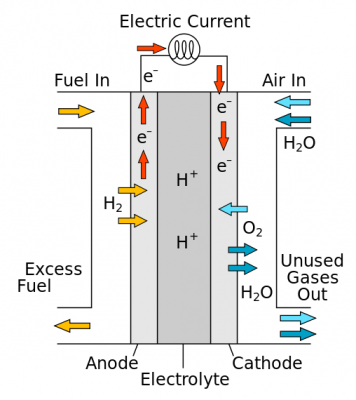
    A hydrogen fuel cells function like a battery, producing electricity via a chemical reaction. This electricity can then be used to run an electric motor, just as in an electric car. But instead of requiring recharge of the batteries in an electric car, the fuel cell car can be refilled with hydrogen instead.

    In contrast to fossil fuel cars, a vehicle fueled with pure hydrogen emits only water as a waste product. However, it should be noted that the production of the hydrogen itself may create pollutants – unless produced using only renewable energy.

    On a side note, hydrogen is the most abundant element in the universe.

    _______________
    http://www.netinform.net/h2/H2Mobility/Default.aspx
    ______________________________

    Cars Future Cars Germany Hydrogen Hydrogen Fuel Cell
    Share. Facebook Twitter Pinterest LinkedIn Tumblr Email Copy Link

    Related Posts

    The Rise of Range Extended Electric Vehicles (REEVs): A New Era of Hybrid Mobility

    February 6, 2025

    Across The Atlantic On Hydrogen? A Liquid Hydrogen Plane Paves Way for Zero Emission Flight

    December 12, 2021

    The Experimental Engine That Could Get Us Anywhere in the World in 2 Hours

    December 11, 2020

    What Can 6,000 Electric Vehicles Tell Us about Ev Battery Health?

    January 23, 2020

    Making a Case for Returning Airships to the Skies

    August 29, 2019

    Alaka’i Technologies Unveils Skai, a Hydrogen-Powered Air Taxi

    June 23, 2019
    Recent Posts
    • How the End of Bretton Woods Reshaped Our Economies — and Our Politics
    • Can the U.S. Really Handle 250% Debt-to-GDP? Why Jackson Hole’s Daring Paper Is Wrong
    • Japan’s Fiscal Trap: What Happens If Austerity Is No Longer an Option?
    • The Rise of Range Extended Electric Vehicles (REEVs): A New Era of Hybrid Mobility
    • The Great Capital Rotation: A Shift from U.S. Treasuries to Gold and Real Assets
    • The Hidden Risks of Short-Term Debt: A Balancing Act in U.S. Fiscal Policy
    • The Looming U.S. Debt Spiral: Understanding the Risks
    • The Looming Recession: Seven Economic Indicators Flashing Red for 2025
    • Europa Clipper: NASA’s Mission to Unlock the Secrets of Jupiter’s Icy Moon
    • Could Hedge Funds Cause Chaos in the U.S. Treasury Market? And What About Inflation?
    © 2025 Illustrated Curiosity

    Type above and press Enter to search. Press Esc to cancel.

    This website uses cookies to improve your experience. We'll assume you're ok with this, but you can opt-out if you wish.Accept Reject Read More
    Privacy & Cookies Policy

    Privacy Overview

    This website uses cookies to improve your experience while you navigate through the website. Out of these, the cookies that are categorized as necessary are stored on your browser as they are essential for the working of basic functionalities of the website. We also use third-party cookies that help us analyze and understand how you use this website. These cookies will be stored in your browser only with your consent. You also have the option to opt-out of these cookies. But opting out of some of these cookies may affect your browsing experience.
    Necessary
    Always Enabled
    Necessary cookies are absolutely essential for the website to function properly. This category only includes cookies that ensures basic functionalities and security features of the website. These cookies do not store any personal information.
    Non-necessary
    Any cookies that may not be particularly necessary for the website to function and is used specifically to collect user personal data via analytics, ads, other embedded contents are termed as non-necessary cookies. It is mandatory to procure user consent prior to running these cookies on your website.
    SAVE & ACCEPT