
At the Tokyo Motorshow, Toyota showed its airless tires concept, which may be seen on the roads in 2020.
Michelin introduced a prototype of its airless radial tire X-Tweel at the Paris car show in 2014 already. This design consisted of a hub joined to a rubber wheel with soft flexible polyurethane spokes. This tire design is seen on slow-moving vehicles such as lawn mowers and golf carts today. Bridgestone has also developed its own version of airless tires.
The lightweight construction design of these wheels is especially interesting for the rapidly advancing sector of vehicles with alternative power sources, for which weight savings are crucial for increased range. But for the automotive industry, a commercial product is still very much in the future. Still, there are investments and progress being made by many manufacturers, not least Toyota.
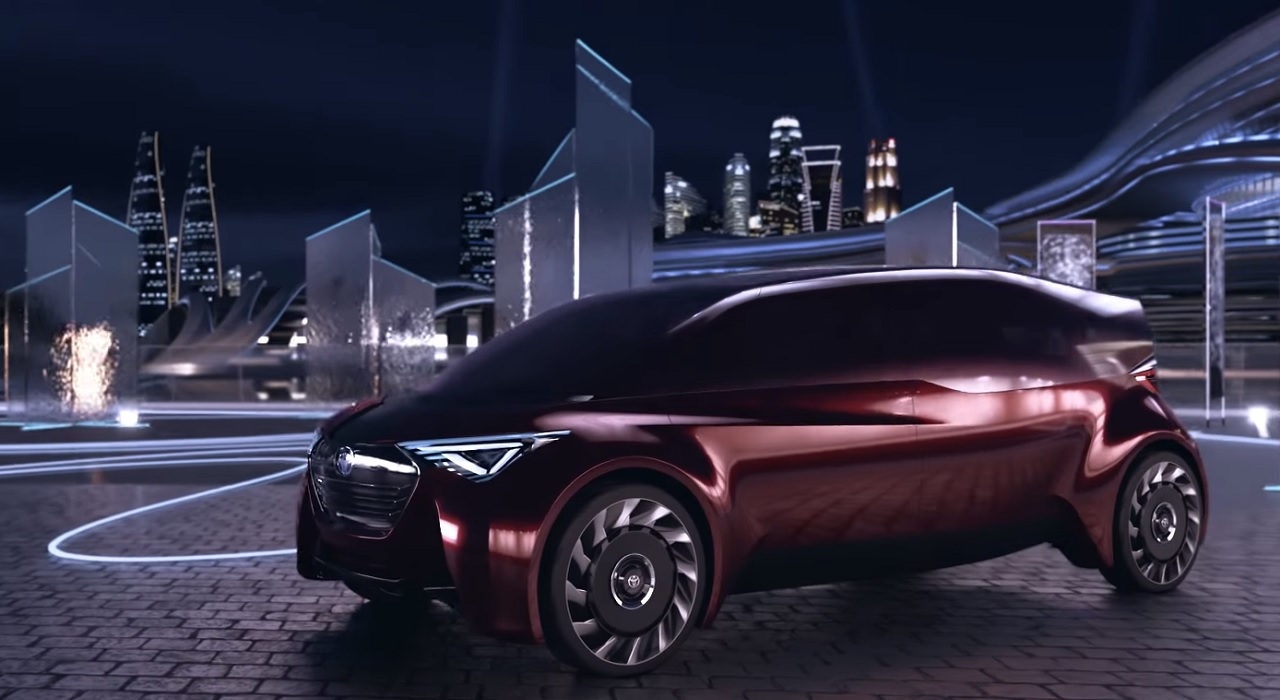
Toyota showed its concept airless tires mounted on a hydrogen-driven Fine-Comfort Ride concept vehicle at the Tokyo Motorshow. The car has electric in-wheel motors, that consists of a rubber band on top of a plastic and aluminum rim.
Including the electric motors, the wheels have the same weight as a standard wheel pneumatic tire, but Toyota’s chief engineer Takao Sato believe that it is possible to lose five pounds per wheel by 2025, equivalent to 30 percent of the weight.
“For car manufacturers, airless tires are primarily an attractive alternative to electric cars. Fine-Comfort Ride is great as a crossover / SUV, but these wheels could be used by any electric car, “
– Takao Sato to Autonews.
Sumitomo Rubber Industries, which manufactures the tire itself, has already tested the design on golf and mini-cars. Now, more car manufacturers have shown interest in the product. One problem, however, is that the tire has a 10-20 percent higher friction than standard tires. On the other hand, the manufacturing cost is approximately the same as for a regular tire.
“Airless tires contribute to greater safety and peace of mind in transportation by freeing the driver from worries about punctures and the trouble of having to manage tire pressure.”
– Sumitomo wrote in an official statement
Sumitomo Rubber Industries believes that a product will commercially available by 2020.